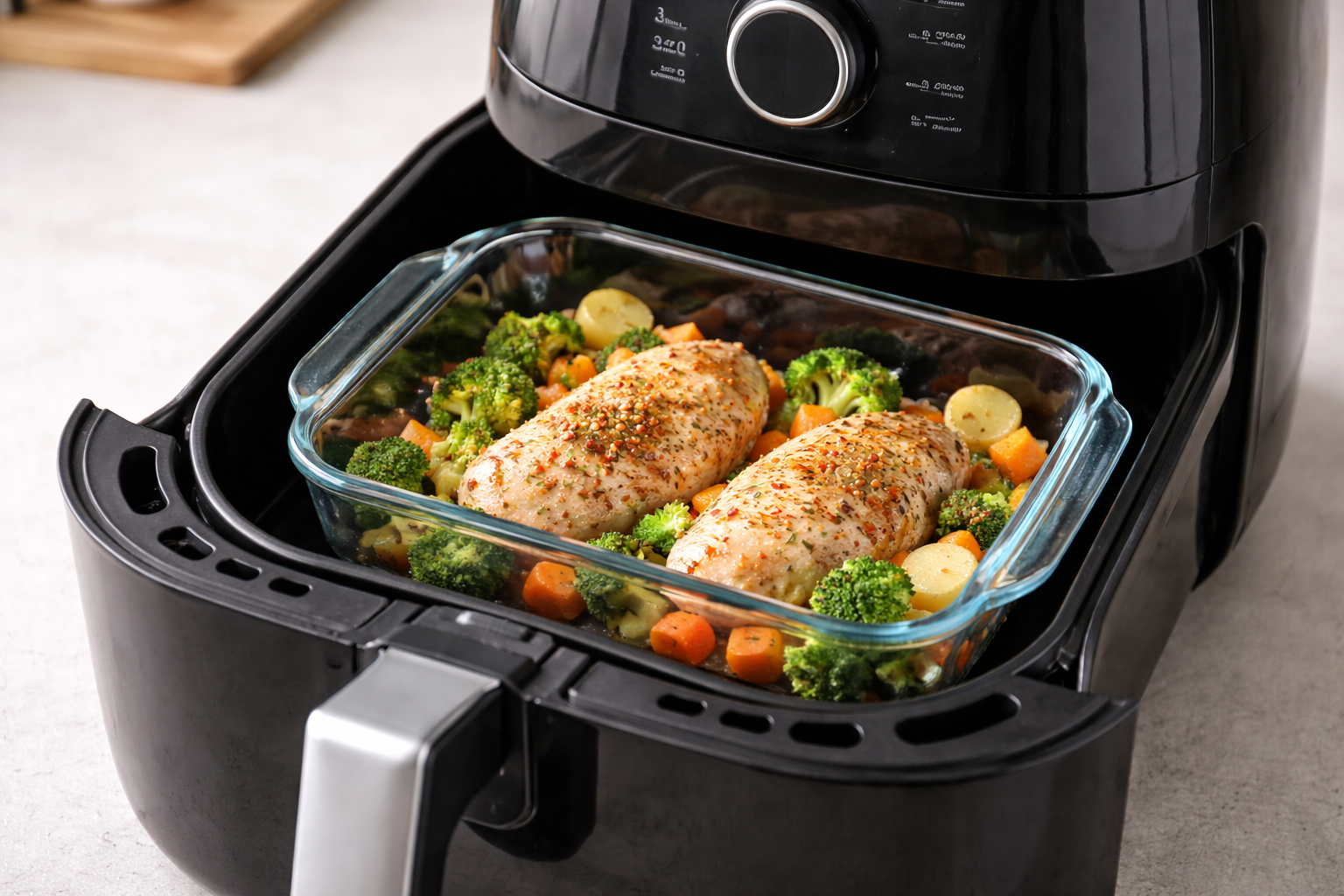
If your air fryer smells like burning, produces smoke, or cooks unevenly, the heating element is often the hidden cause. The good news: you can usually clean it safely in under 15 minutes.
Quick answer:
- Light grease = easy to clean at home
- Thick, burnt buildup = needs deeper cleaning
- Damage or peeling coating = safer to replace the air fryer
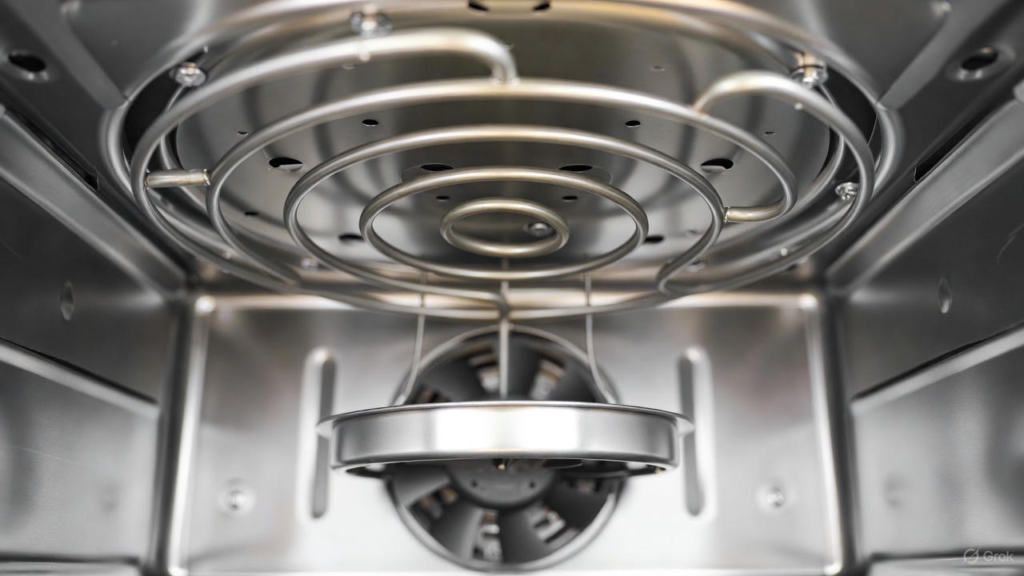
Grease, oil vapors, and tiny food particles naturally rise during cooking. Over time, they stick to the heating coil and the metal shield around it. At first, you may not notice anything. But later, you might smell burning grease, see smoke, or even notice uneven cooking. In some cases, buildup can also make your air fryer louder than usual as the fan struggles to circulate hot air properly.
If your air fryer is making unusual sounds, this guide on air fryer noise explains what’s normal and what’s not. That’s your air fryer telling you it needs attention.
The good news is that cleaning the heating element is easier than it sounds. You don’t need special tools, harsh chemicals, or technical skills. With a bit of patience and the right method, you can safely clean it at home and extend the life of your air fryer.
See safe cleaning tools that won’t damage your air fryer:
In this guide, you’ll learn when the heating element needs cleaning, what to use (and what to avoid), and a step-by-step method that actually works. Let’s get into it.
Why the Air Fryer Heating Element Gets Dirty
Every time you cook, hot air circulates inside the air fryer. Along with it comes grease mist, oil droplets, and crumbs.
Over time, this buildup can cause:
- Burning smells during cooking
- Smoke coming from the air fryer
- Reduced heating efficiency
- Unevenly cooked food
Grease buildup on the heating element is also one of the most common reasons an air fryer starts smoking unexpectedly.
If smoke is a frequent issue for you, this article on why an air fryer smokes can help you pinpoint the exact cause.
This happens faster if you cook fatty foods like chicken wings, sausages, or burgers often. Larger models, especially extra large capacity air fryers, can collect even more residue simply because they’re used for bigger portions and longer cooking times.
Regular light cleaning helps prevent heavy buildup and keeps your air fryer performing like new.
When Should You Clean the Heating Element?
You don’t need to clean the heating element after every use. But there are clear signs that it’s time.
Look out for:
- A smoky smell even when cooking simple foods
- Visible grease or dark spots on the coil
- Smoke appearing before food starts cooking
- A burnt taste that wasn’t there before
Heavy buildup can also affect temperature performance and make it seem like your air fryer is not heating up properly.
For most households, a deep clean every 1–2 months is enough. If you use your air fryer frequently, monthly cleaning is a smart habit.
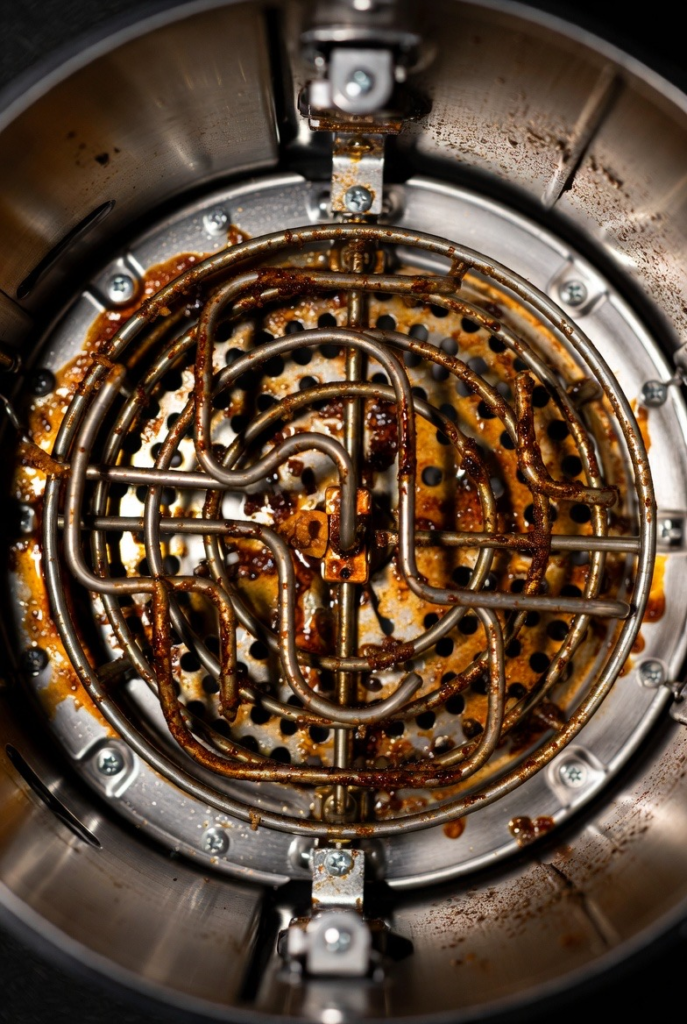
Should You Clean It or Replace the Air Fryer?
✔ Clean it if:
- You see grease or light buildup
- There’s mild smoke or smell
- Performance dropped slightly
❌ Replace it if:
- The coating looks damaged or peeling
- Smoke continues after cleaning
- It shuts off or overheats frequently
If cleaning doesn’t fix the issue, check reliable air fryers that handle grease buildup better`
What You’ll Need Before You Start
Before cleaning, make sure the air fryer is completely cool and unplugged. Safety always comes first.
Prepare these simple items:
- Soft sponge or microfiber cloth
- Old toothbrush or soft-bristle brush
- Warm water
- Mild dish soap
- Baking soda (optional, for tough grease)
- Paper towels
Avoid steel wool, metal brushes, or harsh cleaners. These can damage the heating element’s protective coating. Using the right tools matters. Cheap or abrasive brushes can damage the heating element coating and make the problem worse over time.
See recommended non-scratch cleaning tools for air fryers (safe for heating elements)
Step-by-Step: How to Clean Air Fryer Heating Element
This method is safe for most basket-style air fryers and doesn’t require taking the unit apart.
- Time: 10–15 minutes
- Difficulty: Easy
- Tools needed: Basic household items
Unplug and Flip the Air Fryer
Remove the basket and tray first. Then carefully turn the air fryer upside down or on its side so you can clearly see the heating element.
Good lighting helps here. Use a flashlight if needed.
Dry Clean Loose Debris First
This is where most people rush — and end up spreading grease instead of removing it. Start with a dry paper towel or soft brush.
- Gently wipe away crumbs and loose residue
- Don’t press hard on the heating coil
- Take your time around corners and shields
This step prevents grease from spreading once you add moisture.
Use a Damp Cloth for Light Grease
Dip a cloth or sponge in warm soapy water. Wring it out well—it should be damp, not dripping.
- Gently wipe the heating element
- Focus on greasy spots
- Avoid soaking the area
For light buildup, this may be all you need. If your air fryer still smells after this step, it usually means grease is baked onto the element.
Tackle Stubborn Grease with Baking Soda
This method works surprisingly well and is safer than using harsh cleaners.
- Mix baking soda with a few drops of water to form a paste
- Apply gently with a toothbrush
- Let it sit for 5–10 minutes
- Wipe clean with a damp cloth
This method is commonly recommended and works without scratching the surface.
Let It Dry Completely
Once clean, leave the air fryer upside down for at least 30–60 minutes.
Make sure everything is fully dry before plugging it back in. Moisture left near the heating element can sometimes cause odors or prevent the air fryer from turning on.
If your air fryer won’t power up after cleaning, see this guide on air fryer won’t turn on for safe troubleshooting steps.
Common Mistakes to Avoid
Cleaning the heating element is simple, but a few mistakes can cause problems.
Avoid these:
- Spraying water or cleaner directly into the air fryer
- Using abrasive pads or metal tools
- Cleaning while the unit is still warm
- Ignoring the underside of the element
Taking a gentle approach is always better than scrubbing aggressively.
How to Keep the Heating Element Clean Longer
Prevention makes cleaning much easier.
Try these habits:
- Clean your air fryer basket regularly
- Use parchment liners or air fryer-safe mats
- Avoid overloading greasy foods
- Wipe the interior once a week
Choosing the right liners and cleaning tools makes a big difference — here’s our complete guide to the best air fryer accessories for 2026, including reusable silicone liners and non-abrasive brushes designed to protect your heating element and improve airflow.
Frequently Asked Questions
How often should I clean the air fryer heating element?
For regular home use, inspect the heating element weekly and clean it at least once a month. If you cook fatty foods like bacon or wings frequently, check it more often. Grease buildup can reduce heating performance and even cause smoke.
Can I use water to clean the heating element?
You should never pour water directly onto the heating element. Always unplug the unit first and let it cool completely. Use a slightly damp cloth or soft brush to gently remove residue. Avoid soaking or spraying liquid inside the appliance.
What happens if I don’t clean the heating element?
Neglecting the heating element can lead to:
- Smoke during cooking
- Burning smells
- Uneven heating
- Reduced cooking efficiency
- Shortened appliance lifespan
Over time, heavy buildup can even trigger overheating protection and cause the unit to shut off.
Is it safe to use a toothbrush or small brush to clean it?
Yes — a soft toothbrush or non-metal brush is safe and effective. Avoid wire brushes, steel wool, or anything abrasive, as they can damage the heating coil or protective coating.
Can a dirty heating element stop my air fryer from heating?
Yes. Excess grease can insulate the element and reduce heat output. In severe cases, sensors may detect overheating and prevent the unit from operating normally.
Why does my air fryer still smell after cleaning the heating element?
If odor remains, check:
- The fan area
- Air vents
- The basket and tray
- Hidden grease splatter on interior walls
Sometimes smells come from residue below the heating coil rather than on it. A second gentle cleaning usually solves the issue.
Conclusion: A Small Habit That Makes a Big Difference
Learning how to clean an air fryer heating element may seem like a small detail, but it has a big impact on performance and safety. Regular cleaning helps prevent smoke, eliminates burning odors, improves heating efficiency, and keeps your food tasting the way it should.
The good news? You don’t need special tools, harsh chemicals, or technical skills. With gentle cleaning, the right materials, and a consistent routine, you can keep your air fryer working like new.
If you’re curious about how safety concerns like smoke, odors, and material breakdown relate to long-term health, check out our detailed guide on whether air fryers are toxic and what the science really says. It explains when odors and overheating are harmless — and when they might indicate an issue worth paying attention to.
Regular cleaning keeps your air fryer running safely and efficiently. In most cases, removing grease buildup is all it takes to fix smoke, запах, and uneven cooking.But if problems keep coming back even after proper cleaning, it may be a sign your air fryer is wearing out or poorly designed for airflow.
See the most reliable air fryers that are easier to clean and maintain