Buying an air fryer should be simple. Instead, it often turns into a rabbit hole of wattage numbers, basket sizes, decibel claims, and confusing presets that all sound the same. But how to choose the right air fryer?
One model promises restaurant-level crispiness. Another claims to be whisper-quiet. A third swears it can replace your oven — including pizza night. Then you read the reviews and suddenly everyone is complaining about noise, uneven cooking, or an air fryer that just… shuts off.
The truth is this: most air fryer disappointment comes from choosing the wrong model for your lifestyle, not from the appliance itself.
This guide exists to fix that.
Instead of pushing brands or hype features, we’ll focus on what actually matters when choosing an air fryer — noise level, power, and safety — and explain how each one affects your day-to-day cooking. You’ll learn what to prioritize, what to ignore, and how to avoid the most common (and expensive) mistakes people make.
If you want an air fryer that fits your kitchen, your habits, and your expectations — this is where to start. And once you’ve chosen one, this simple beginner guide walks you through how to start using it correctly from day one.
Start With Noise: The Most Ignored Dealbreaker
Noise is rarely mentioned on product pages, yet it’s one of the fastest ways to regret your purchase.
Air fryers rely on high-speed fans. Some are tolerable. Others sound like a small vacuum cleaner.
Noise matters more if:
- You live in an apartment or open-plan home
- You cook early mornings or late evenings
- Your kitchen is near bedrooms or living areas
Why some air fryers are louder than others
- Fan quality (cheap fans = sharper, harsher noise)
- Housing material (thin plastic amplifies sound)
- Higher wattage motors pushing air aggressively
Manufacturers often avoid listing decibel levels, so user experience becomes critical here. If quiet cooking is important to you, it’s worth focusing specifically on models designed for low-noise operation.
For a detailed breakdown, see our guide to best quiet air fryers, where noise is tested and compared instead of guessed.
Power & Wattage: What the Numbers Really Mean
Wattage looks important — and it is — but it’s also misunderstood.
Most air fryers range between 1200W and 1800W. More watts don’t automatically mean better food.
Higher wattage helps with:
- Faster preheating
- Better browning on frozen foods
- Cooking thicker cuts evenly
But higher wattage also means:
- More electricity draw
- Louder operation
- Potential outlet or breaker issues in older homes
Real-world recommendation:
- 1200–1400W → singles, couples, light use
- 1500–1700W → families, frequent cooking
- 1800W+ → large batches, pizza, oven replacement
If you’re unsure how wattage actually affects cooking speed, energy usage, and performance differences between models, this detailed guide breaks down how air fryer power levels translate to real-world cooking results.
If your air fryer randomly stops mid-cook, wattage and power draw could be part of the issue. This is explained in detail in the reasons why your air fryer turns off.
Basket Size vs Capacity: The Metric That Actually Matters
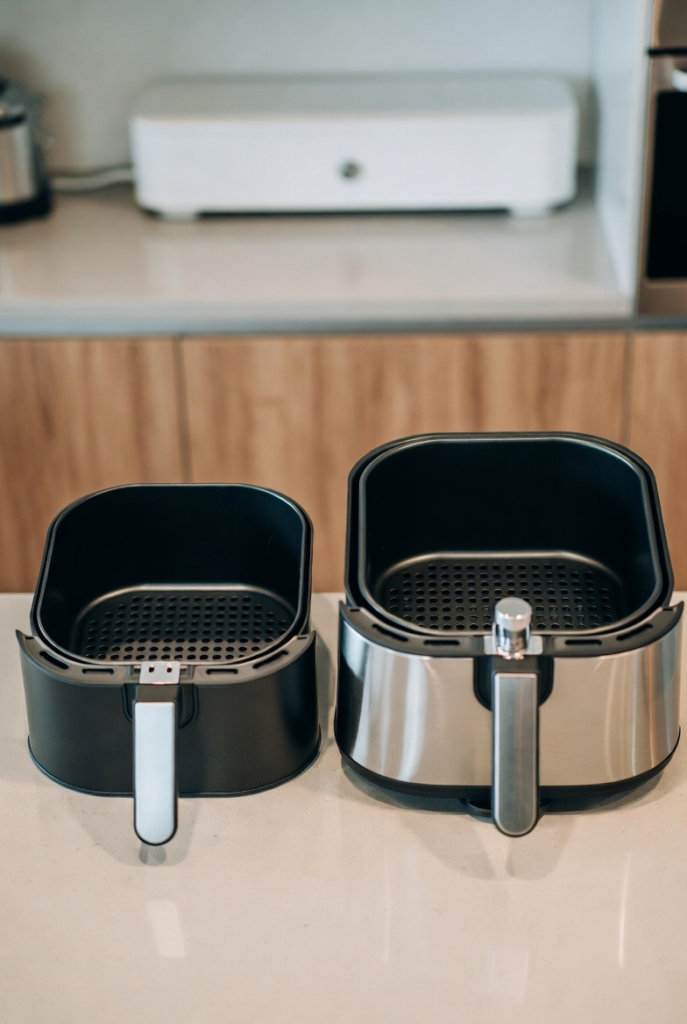
Manufacturers love listing capacity in quarts or liters — but that number alone is misleading. To understand how basket shape, width, and usable cooking space affect real cooking results, see our complete air fryer basket size guide..
What matters more is:
- Basket width
- Flat cooking surface
- Ability to cook in a single layer
A deep but narrow basket forces food to stack, which:
- Reduces crispiness
- Requires shaking and flipping
- Creates uneven results
This becomes especially important if you cook:
- Chicken thighs
- Vegetables
- Pizza or flatbreads
Dual-basket designs solve this by separating foods and airflow. If that sounds appealing, our Ninja Foodi dual basket review explains when this design actually makes sense — and when it doesn’t.
Another factor many buyers overlook is that air fryers themselves come in two completely different layouts. This detailed comparison of basket vs oven style air fryers explains how each design changes cooking space, versatility, and everyday usability.
Pizza Performance: Where Most Air Fryers Fail
Not every air fryer deserves to touch pizza.
Pizza exposes weaknesses instantly:
- Weak top heat = unmelted cheese
- Poor airflow = soggy crust
- Small baskets = folded or uneven slices
What you need for good air fryer pizza
- At least 1600W of power
- Wide basket or pizza-compatible tray
- Stable temperature up to 400°F / 200°C
- Strong top-down airflow
Smaller, low-powered models can handle fries — but struggle with pizza. If pizza night matters to you, don’t assume all air fryers are equal.
We tested and compared models specifically for this in best air fryer for pizza, focusing on crust texture and cheese melt — not marketing claims.
Safety Features: Non-Negotiables, Not Bonuses
Air fryers are generally safe, but budget models often cut corners here.
Must-have safety features
- Automatic shut-off when basket is removed
- Overheating protection
- Cool-touch housing
- Stable, non-slip feet
These aren’t luxury features — they prevent burns, electrical faults, and damaged countertops.
If your air fryer runs but doesn’t get hot, safety sensors could be involved. This is covered step-by-step in Air fryer not heating up?
Air fryer safety isn’t only about electrical protections. Some buyers also care about the type of basket coating, since most models use PTFE-based non-stick surfaces. While these are generally safe at normal cooking temperatures, some people prefer ceramic-coated baskets as a PTFE-free alternative. If that’s something you’re considering, this guide to air fryers with ceramic-coated baskets explains which models use this type of coating and how they compare to traditional non-stick designs.
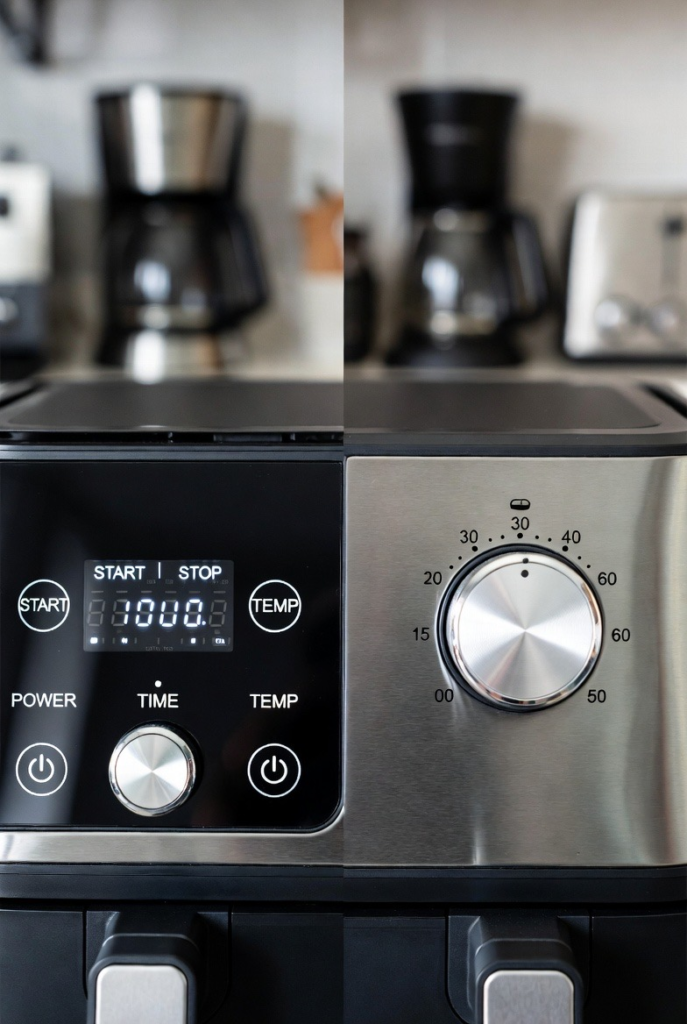
Controls: Digital Convenience vs Manual Reliability
This is less about performance and more about lifestyle.
Digital controls
- Presets and timers
- Precise temperature control
- Modern interface
Manual dials
- Faster to operate
- Fewer electronic failures
- Often last longer over time
If you like “set it and forget it,” digital works well. If you want reliability and simplicity, manual controls deserve more credit than they get.
Brand Reputation: Why It Still Matters
Not all brands test airflow, heat distribution, and long-term durability equally.
Established brands tend to offer:
- Better fan calibration
- More consistent cooking
- Stronger warranties
For example, our Philips 2000 series review highlights how airflow design — not just wattage — impacts real cooking results over time.
If you’re trying to decide between the two most popular air fryer brands, this side-by-side Ninja and Cosori comparison breaks down the real differences in performance. For example, this Ninja AF181 vs Cosori TurboBlaze comparison breaks down real differences in noise, power, basket design, and everyday cooking performance — not just marketing claims.
Brand isn’t everything, but poor build quality is usually obvious after a few months of use.
Build quality becomes especially noticeable over time. If you’re wondering how durability varies between models and what lifespan you should realistically expect, this guide explains what affects how long an air fryer typically stays reliable.
The Most Common Air Fryer Buying Mistakes
These come up again and again:
- Choosing price over noise tolerance
- Buying maximum wattage without checking outlets
- Ignoring basket shape
- Skipping safety features
Avoiding these mistakes alone puts you ahead of most buyers.
How to Choose the Right Air Fryer for You
Before buying, ask yourself:
- Do I care more about quiet or speed?
- Am I cooking for one or several people?
- Will I cook pizza or bake often?
- Do I want simplicity or presets?
Once you answer those honestly, the “right” air fryer becomes obvious.
Frequently Asked Questions (FAQ)
Does an air fryer replace a traditional oven?
An air fryer can replace an oven for small portions and everyday meals, but not for large roasts or full-size baking trays. It excels at quick cooking, reheating, and crisping food faster than an oven.
Many people use an air fryer as a secondary oven, especially for weeknight meals or small households.
Are air fryers healthy to use every day?
Yes, air fryers are safe for daily use when used correctly. They allow you to cook with less oil while still achieving crisp textures.
Health benefits depend more on what you cook than how often you use the appliance. Vegetables, lean proteins, and homemade meals benefit the most from air fryer cooking.
Do air fryers produce harmful chemicals?
When used properly, air fryers do not produce dangerous levels of harmful compounds. However, cooking starchy foods at very high temperatures for long periods can increase acrylamide formation.
Is a windowed air fryer basket useful?
A viewing window can be helpful, but it’s not essential. It allows you to check doneness without opening the basket, which helps retain heat.
However, airflow performance and basket design matter far more than visibility.
Do air fryers dry out food?
They can, especially if:
- The temperature is too high
- Cooking time is too long
- Food is overcrowded
Using a light oil spray, flipping food halfway, and avoiding overcooking helps maintain moisture. If dryness is a recurring issue, airflow design or basket shape may be the real problem
Conclusion
Choosing the right air fryer isn’t about chasing features — it’s about alignment. Noise level affects daily comfort. Power determines consistency. Basket design shapes results. Safety features protect more than just your food.
When you understand these factors, you stop guessing and start choosing intentionally.
A well-chosen air fryer doesn’t just cook better — it fits seamlessly into your routine, making everyday meals easier, quieter, and more enjoyable. And that’s exactly what a good kitchen appliance should do.