Air fryers have quietly become one of the hardest-working appliances in modern kitchens. They cook faster than ovens, use less oil, and make weeknight meals dramatically easier. But as more households rely on them daily, one question comes up again and again: How long do air fryers last before they stop working properly?
If you’ve ever noticed longer cook times, uneven crisping, strange smells, or random shutdowns, you’re not imagining things. Air fryers slowly lose performance long before they completely fail. Most owners don’t notice the early warning signs until cooking results start getting worse or the appliance suddenly stops working.
The good news is that air fryer lifespan is surprisingly predictable. Even better, many of the biggest causes of early failure are completely preventable.
In this guide, you’ll learn the realistic lifespan of air fryers, what actually causes them to wear out, how to spot failure early, and simple habits that can dramatically extend the life of your appliance.
How Long Do Air Fryers Last on Average?
Most air fryers last 2 to 5 years under normal home use. However, lifespan varies depending on cooking frequency, build quality, and maintenance habits.
Expected Lifespan Based on Usage
- Occasional use (1–2 times weekly)
4–6 years is common - Regular use (3–5 times weekly)
Typically 3–4 years - Daily or heavy use
Often 2–3 years
Unlike traditional ovens, air fryers rely heavily on compact heating elements and high-speed fans. These components operate at very high temperatures in a small space, which naturally causes gradual wear.
Why Air Fryers Eventually Wear Out
Understanding why air fryers fail helps explain how to extend their lifespan.
Heating Element Fatigue
The heating element is the hardest-working part of the appliance. Over time, repeated heating and cooling cycles weaken internal materials. This often causes:
- Longer preheat times
- Inconsistent cooking
- Complete loss of heat
If your appliance begins struggling to reach cooking temperature, troubleshooting steps inside How to clean air fryer heating element can sometimes restore performance.
Airflow System Wear
Air fryers depend on powerful fans to circulate heat evenly. When fans weaken or become blocked with grease or crumbs, food cooks unevenly and internal temperatures spike.
Restricted airflow is one of the most overlooked causes of air fryer failure.
Grease and Food Residue Damage
Grease buildup is more harmful than most users realize. It can:
- Insulate heating components
- Trigger overheating sensors
- Create smoke and burning smells
- Damage internal electronics
Regular maintenance explained in How to clean an air fryer basket helps prevent these issues from developing.
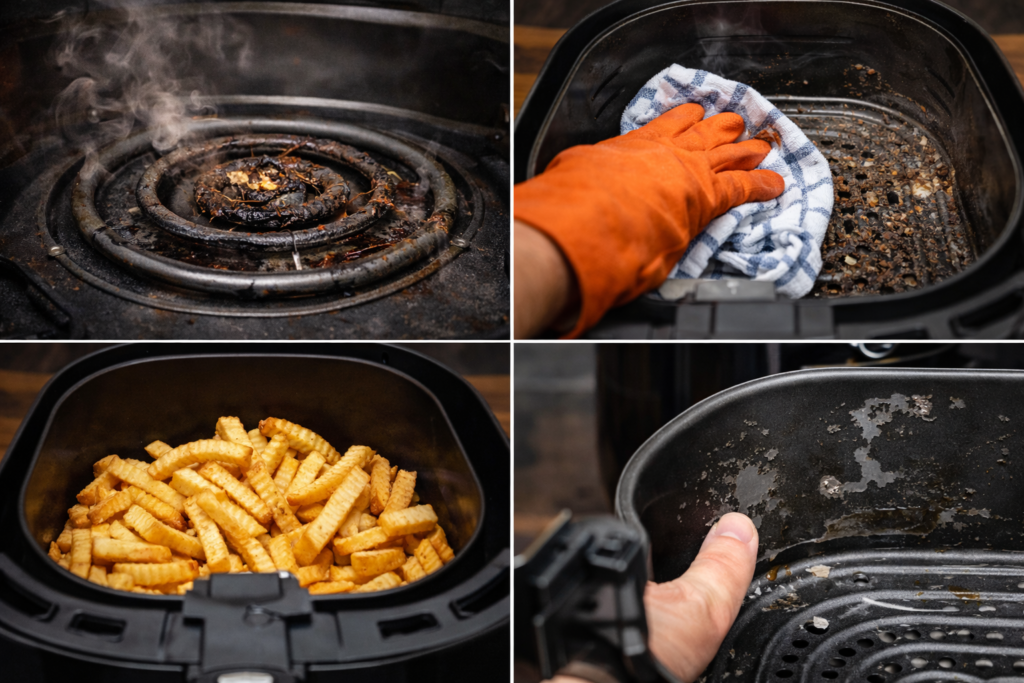
Signs Your Air Fryer Is Starting to Fail
Air fryers almost always show warning signs before breaking completely. Recognizing them early can save money and prevent safety risks.
Cooking Results Suddenly Change
If food stops crisping properly or takes longer to cook, airflow or heating performance is likely declining.
The Air Fryer Turns On But Doesn’t Heat
This is one of the most common lifespan-related failures. Possible causes include heating element damage or internal wiring problems. Troubleshooting tips in Air fryer not heating up can help identify whether cleaning or repair may solve the issue.
The Appliance Shuts Off Mid-Cooking
Unexpected shutdowns usually indicate overheating or safety sensor activation. If this happens repeatedly, internal components may be deteriorating. You can learn common causes in Why does my air fryer turn off?
Strange Smells or Loud Noises
New rattling sounds, grinding noises, or persistent burning smells typically indicate:
- Fan motor wear
- Grease contacting heating elements
- Electrical component stress
Ignoring these symptoms can shorten appliance life significantly.
Basket Coating Is Peeling or Damaged
While this doesn’t always mean the air fryer is failing, damaged coating can affect cooking performance and cleaning safety.
What Shortens Air Fryer Lifespan the Most
Many early air fryer failures are caused by simple usage habits.
Overloading the Basket
When food blocks airflow, the appliance must work harder to maintain temperature. This causes internal components to overheat and wear faster.
For best performance:
- Cook in smaller batches
- Shake or flip food halfway through
- Follow capacity guidelines
Skipping Regular Cleaning
Even small grease layers gradually reduce airflow efficiency. This forces heating elements and fans to operate under extra strain.
Cleaning after each use prevents long-term internal buildup.
Running Back-to-Back Cooking Cycles
Air fryers need cooling time between uses. Continuous operation traps heat inside the housing and stresses electronic controls.
Poor Appliance Placement
Air fryers need space for ventilation. Avoid placing them:
- Against walls
- Near water or humidity
- Inside cabinets during use
Good airflow protects internal wiring and cooling systems.
How to Make Your Air Fryer Last Longer
Simple maintenance habits can add years to your appliance lifespan.
Clean After Every Use
Focus on removing grease and food residue from:
- Basket
- Interior surfaces
- Crumb trays
- Air vents
Even quick cleaning prevents grease hardening and airflow blockage.
Use Proper Accessories Only
Non-heat-safe tools can damage coatings or restrict airflow. Always choose accessories designed specifically for air fryers.
Avoid Excess Oil or Sugary Coatings
Sticky residues burn easily and are harder to clean. These residues often accumulate near heating elements and fans.
Allow Cooling Between Cooking Sessions
Letting the appliance cool reduces stress on internal electronics and prolongs component lifespan.
Does Price Affect How Long Air Fryers Last?

Higher-priced air fryers often include:
- Stronger heating systems
- More durable fan motors
- Better temperature control
- Improved airflow engineering
These features can increase lifespan, especially for frequent users. Some premium models are also designed for quieter operation. If noise level matters, exploring Best quiet air fryers can help you find durable, low-noise options.
However, maintenance habits still matter more than price alone.
When It’s Time to Replace Your Air Fryer
Eventually, repairs become less practical than replacement.
Consider Replacement If:
- The air fryer frequently overheats
- Cooking results remain inconsistent
- Electrical problems keep returning
- Repair costs approach the price of a new unit
If you’re shopping for a replacement, guides like How to choose the right air fryer can help you select a model that fits your cooking style and usage frequency.
Frequently Asked Questions
Can an air fryer last longer than 5 years?
Yes, but it usually requires light usage and excellent maintenance. Most units naturally wear out between 2 and 5 years due to heating element fatigue.
Why does my air fryer lose performance over time?
Grease buildup, fan wear, and heating element stress gradually reduce efficiency and airflow quality.
Is it safe to keep using an old air fryer?
It depends. If the appliance overheats, smells like burning, or shuts off unexpectedly, continued use may be unsafe.
Does frequent cleaning damage air fryers?
No. Gentle cleaning actually protects internal components and extends lifespan.
Are basket or oven-style air fryers more durable?
Durability varies by design quality rather than style alone. Models with better airflow systems and reinforced heating elements typically last longer.
Conclusion
Air fryers are durable but not permanent appliances. Most last between 2 and 5 years depending on usage frequency, build quality, and maintenance habits. The heating element, airflow fan, and electronic controls naturally wear down over time, especially when exposed to grease buildup or overheating.
The good news is that simple habits — regular cleaning, proper airflow, avoiding overloading, and allowing cooling periods — can dramatically extend your air fryer’s lifespan. Paying attention to early warning signs like uneven cooking or unexpected shutdowns can also help you address problems before they become expensive or unsafe.
Whether you’re maintaining your current air fryer or planning to upgrade, understanding how these appliances wear out helps you cook more consistently and get the best long-term value from your kitchen investment.