Air fryers have quickly become a favorite kitchen appliance, especially for beginners who want fast, healthier meals without much effort. But once you unbox your new air fryer, one simple question often comes up: where should you place an air fryer in the kitchen?
Many first-time users don’t realize that air fryers release very hot air and steam through rear or top vents. This means placement directly affects safety, airflow, cooking performance, and long-term durability. To understand why airflow matters so much, it helps to know how an air fryer works and how hot air circulates inside the unit.
At first, it might seem like you can put it anywhere there’s space. In reality, placement matters more than most people expect—especially with today’s extra large capacity air fryers designed to cook bigger portions.
The wrong spot can lead to overheating, poor airflow, lingering smells, cabinet damage, or even electrical issues. The good news is that with a few practical guidelines, you can easily choose a location that’s safe, convenient, and comfortable for everyday use.
In this guide, we’ll walk through the safest places to put your air fryer, common beginner mistakes, and smart placement ideas for small kitchens. By the end, you’ll know exactly how to set up your air fryer so it works with your kitchen—not against it.
Why Air Fryer Placement Matters More Than You Think
An air fryer cooks by circulating extremely hot air at high speed. That heat has to escape somewhere. Most air fryers vent hot air (often mixed with grease-laden steam) from the back or the top of the unit. If that airflow is blocked, heat builds up inside the appliance and around it.
This is especially important with larger models and dual-basket units, such as Ninja Foodie. Over time, poor placement can lead to:
- Reduced cooking performance
- Overheating of internal electronics
- Excessive noise or burning smells
- Discoloration or peeling of nearby cabinets
In many home kitchens—especially smaller apartments—improper placement is one of the most common reasons people complain about heat, smells, or long-term wear. Choosing the right spot from the start prevents these issues and makes daily cooking far more enjoyable.
Design and airflow vary noticeably between models. Some air fryers vent heat more aggressively or require extra clearance due to their size and fan power. This becomes obvious when comparing popular models side by side — for example, in our Ninja AF181 vs Cosori TurboBlaze comparison, where differences in airflow direction, footprint, and noise affect how and where each model works best in a kitchen.
Where Should You Place an Air Fryer in the Kitchen for Safe Use?
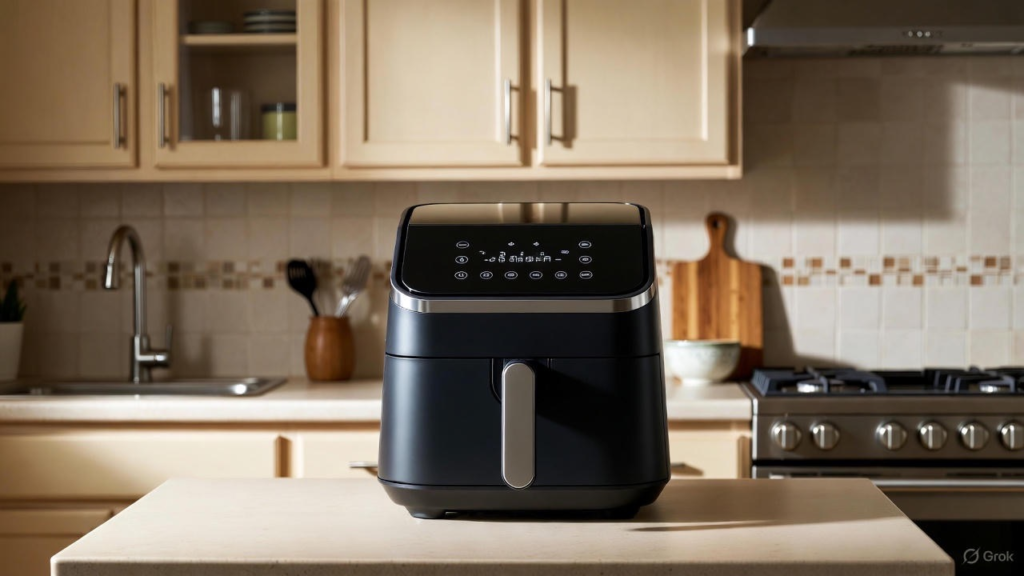
The safest place for an air fryer is on a flat, heat-resistant countertop with open space around it. Most manufacturers recommend leaving at least 4–6 inches (10–15 cm) of clearance on all sides, particularly at the back where hot air usually vents.
A good placement spot should offer:
- A stable, level surface
- Easy access to a power outlet
- Open space above and behind the unit
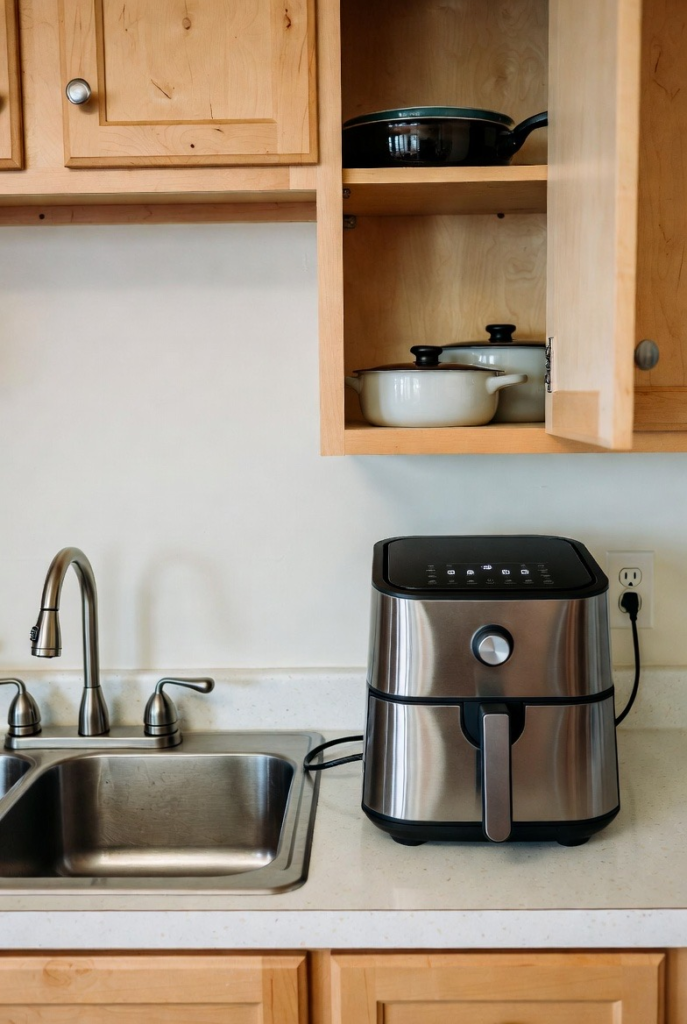
- Safe distance from water sources like sinks
Avoid squeezing your air fryer into tight corners or pushing it directly against walls or backsplashes. Even if it fits physically, restricted airflow can cause problems over time.
Using liners like aluminum foil or parchment paper can also affect airflow, which is why placement becomes even more important when accessories are involved.
Countertop Placement: The Best Option for Most Beginners
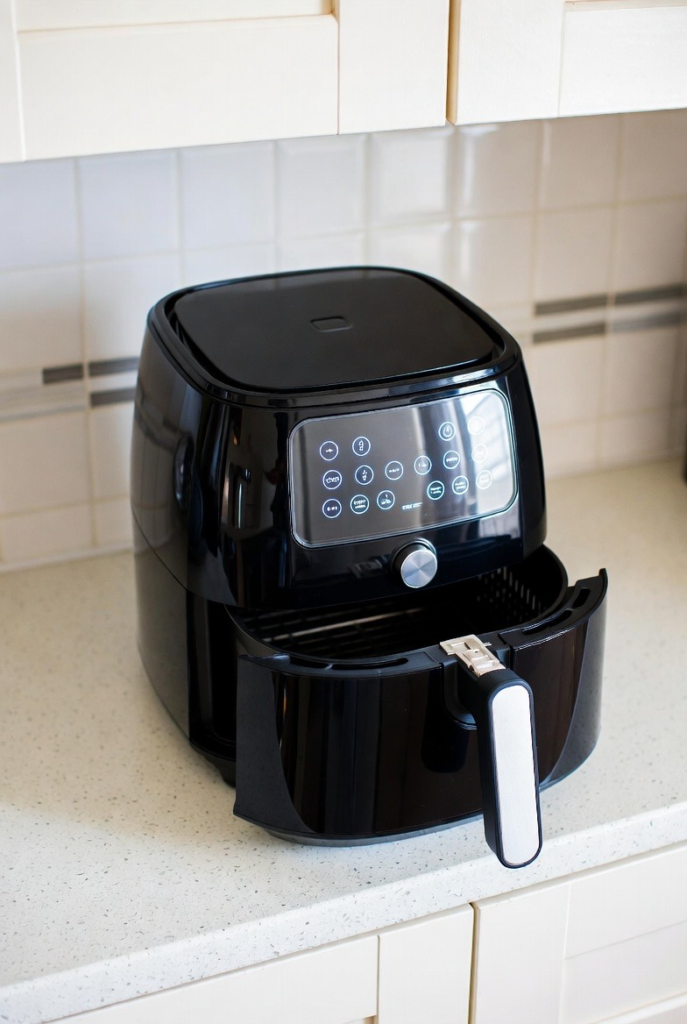
For most people, the kitchen counter is the easiest and safest option. Countertop placement lets you clearly see the controls, pull the basket out safely, and clean up quickly after cooking.
If you use your air fryer daily, keeping it on the counter simply makes sense. Appliances that are easy to reach get used more often, while those hidden in cabinets tend to be forgotten.
If counter space is limited, you may find useful ideas in our guide on best air fryers for small kitchens, which covers compact models and practical space-saving solutions.
Can You Put an Air Fryer Under Kitchen Cabinets?
This is one of the most common beginner questions—and the answer is: only with caution.
Hot air and steam rise during cooking. When an air fryer is placed directly under cabinets without enough clearance, heat and moisture can gradually damage cabinet finishes, especially MDF or laminated surfaces.
If you choose to place an air fryer under cabinets:
- Pull it forward when cooking
- Make sure there is open space above the unit
- Never block rear or top vents
If you use aluminum foil or parchment paper while cooking, blocked airflow can become an even bigger issue — this is why understanding if you can use aluminum foil and if you can use parchment paper safely matters.
If you’re unsure, it’s safer to use an open countertop area where airflow isn’t restricted.
Using a Kitchen Island or Table
A kitchen island can be an excellent place for an air fryer, particularly if it has a built-in outlet. Islands usually provide better airflow and more working space around the appliance.
A sturdy kitchen table can also work, provided that:
- The surface is heat-resistant
- The table doesn’t wobble
- The power cord doesn’t hang where someone could trip
This setup is often useful in small or shared kitchens where counter space is limited.
Where Not to Place an Air Fryer
Knowing where not to place your air fryer is just as important as knowing the right spots. Some locations increase safety risks or cause long-term damage.
❌ Inside closed cabinets while cooking
❌ Directly under low-hanging cabinets
❌ Pressed tightly against walls or backsplashes
❌ Next to sinks or water splashes
❌ On top of other appliances like microwaves
Poor placement can trap heat, block vents, and increase the risk of overheating or electrical problems.
Air Fryer Placement: Good vs Bad Locations
| Placement Location | Safe to Use? | Why It Works (or Doesn’t) |
|---|---|---|
| Open countertop with clearance | ✅ Yes | Allows proper airflow, easy access, and safe daily use |
| Kitchen island with outlet | ✅ Yes | More space around the unit improves ventilation |
| Under cabinets (pulled forward) | ⚠️ Sometimes | Only safe with enough vertical clearance and airflow |
| Inside closed cabinets | ❌ No | Traps heat and steam, serious overheating risk |
| Against wall or backsplash | ❌ No | Blocks vents and prevents heat from escaping |
| Near sink or water source | ❌ No | Increases electrical and safety risks |
| On top of other appliances | ❌ No | Can overheat both devices and block ventilation |
Small Kitchens: Smart Placement Tips
In a small kitchen, placement is all about balance—safety first, convenience second.
Helpful strategies include:
- Choosing compact models designed for tight spaces
- Storing the air fryer on a shelf and moving it to the counter only when in use
- Using rolling carts with heat-resistant tops
If you usually cook for one or two people, compact models like the Philips 2000 series are easier to place on a countertop and need less clearance for proper airflow.
Air Fryer vs Oven Placement Considerations
Many beginners assume an air fryer can be treated like a traditional oven. Unlike built-in ovens, air fryers are portable appliances that rely on open airflow.
If you’re still deciding how an air fryer fits into your kitchen setup, our comparison air fryers vs conventional oven explains why air fryers need flexible placement and how they differ in everyday use.
Making Daily Use Easier with the Right Spot
The best place for your air fryer is one that fits naturally into your cooking routine. If it’s difficult to reach or feels unsafe to use, you’re less likely to use it regularly.
A good daily-use setup allows you to:
- Plug in easily
- Open the basket fully
- Clean around the unit without effort
- Cook without moving other appliances
If you’re still deciding whether an air fryer fits your lifestyle at all, this guide explains if an air fryer worth it for beginners and what to expect in daily use.
Quick Air Fryer Placement FAQ
How much space does an air fryer need?
Most models need at least 4–6 inches (10–15 cm) of clearance on all sides.
Can you run an air fryer inside a cabinet?
No. Air fryers should never be used inside closed cabinets due to heat buildup.
Is it safe to put an air fryer on a wooden counter?
Yes, as long as the surface is flat, stable, and heat-resistant.
Can an air fryer damage cabinets?
Yes, if placed too close. Heat and steam can discolor or warp cabinet surfaces over time.
Conclusion
So, where should you place an air fryer in the kitchen? For most beginners, the answer is a clear, open countertop with enough space around the appliance for proper airflow and safety.
Avoid tight corners, enclosed spaces, and water sources. Give hot air room to escape, and your air fryer will cook better, last longer, and feel safer to use.
If you have a small kitchen, smart placement combined with the right air fryer size makes all the difference. When your air fryer has space, airflow, and a stable surface, you’re already using it the right way—and everyday cooking becomes easier and more enjoyable.