If you’ve ever wondered about putting water in an air fryer, you’re definitely not alone. It’s one of the most common questions beginners (and even experienced users) ask—usually after seeing smoke, dealing with burnt grease, or trying to keep food from drying out.
Air fryers are designed to cook with hot circulating air, not moisture, so adding water can feel counterintuitive. But here’s the truth: in some situations, adding water is actually helpful—and even recommended. The key is knowing when, how, and how much to use without damaging your appliance or ruining your food.
In this guide, we’ll break down exactly when it’s safe to add water, when you should avoid it, and how to use it as a practical trick to improve your cooking results. Whether you’re trying to stop smoke, make cleanup easier, or keep food juicy, you’ll walk away with clear, simple answers.
Can You Put Water in an Air Fryer?
Yes—but only in specific parts of the air fryer and for the right reasons.
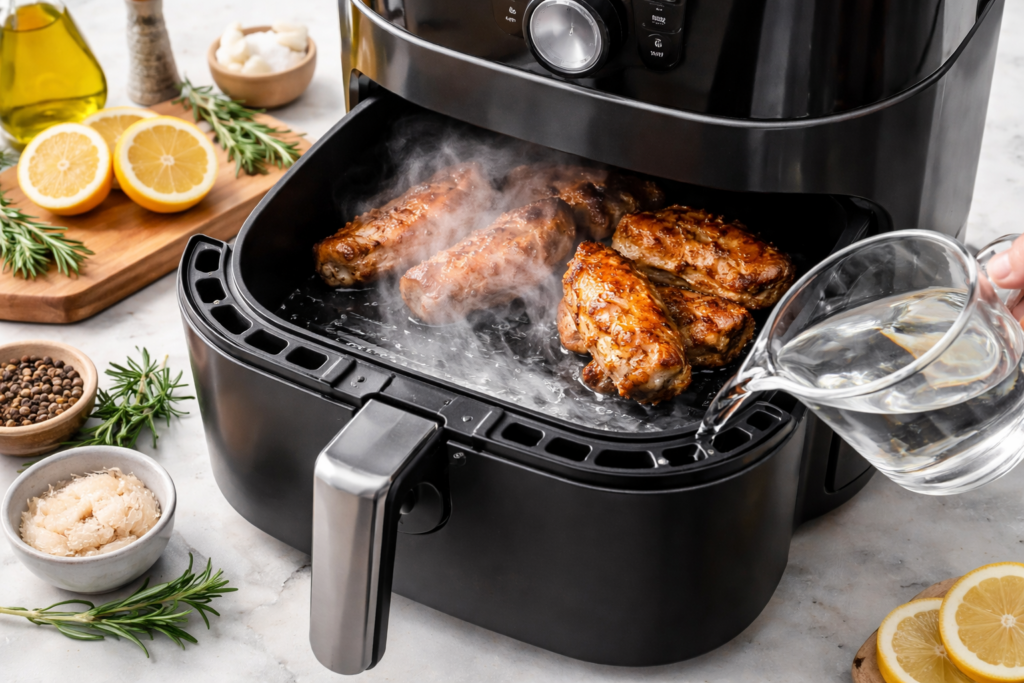
You should never pour water directly into the main cooking compartment while it’s running, especially near electrical components or the heating element. However, adding a small amount of water to the bottom drawer (under the basket) is generally safe in most models.
Safe ways to use water:
- In the bottom tray to reduce smoke
- In a heat-safe container for certain recipes
- During cleaning (when the unit is unplugged and cooled)
Unsafe ways:
- Pouring water over food mid-cooking
- Letting water touch the heating element
- Overfilling the drawer
If you’re unsure about your specific model, it’s always worth double-checking your manual—or brushing up on some general air fryer safety basics for beginners before experimenting.
Why Would You Add Water to an Air Fryer?
Adding water isn’t part of everyday cooking, but it can solve a few common problems.
1. To Reduce Smoke
One of the biggest reasons people add water is to stop smoke caused by grease hitting the hot bottom surface.
When cooking fatty foods like bacon or sausages, grease drips down and burns. Adding a thin layer of water underneath helps cool the grease and prevent it from smoking.
If this is something you’re dealing with often, check out this guide on what causes air fryers to smoke and how to fix it.
2. To Make Cleaning Easier
A little water in the drawer can prevent grease from baking onto the surface, making cleanup faster and less frustrating.
It’s not a replacement for proper cleaning, though. You’ll still want to regularly clean your basket properly and occasionally deep-clean the inside, including the heating area.
3. To Add Moisture (In Limited Cases)
Air fryers are great at crisping—but they can dry out food.
While you shouldn’t try to “steam” food directly in an air fryer, you can:
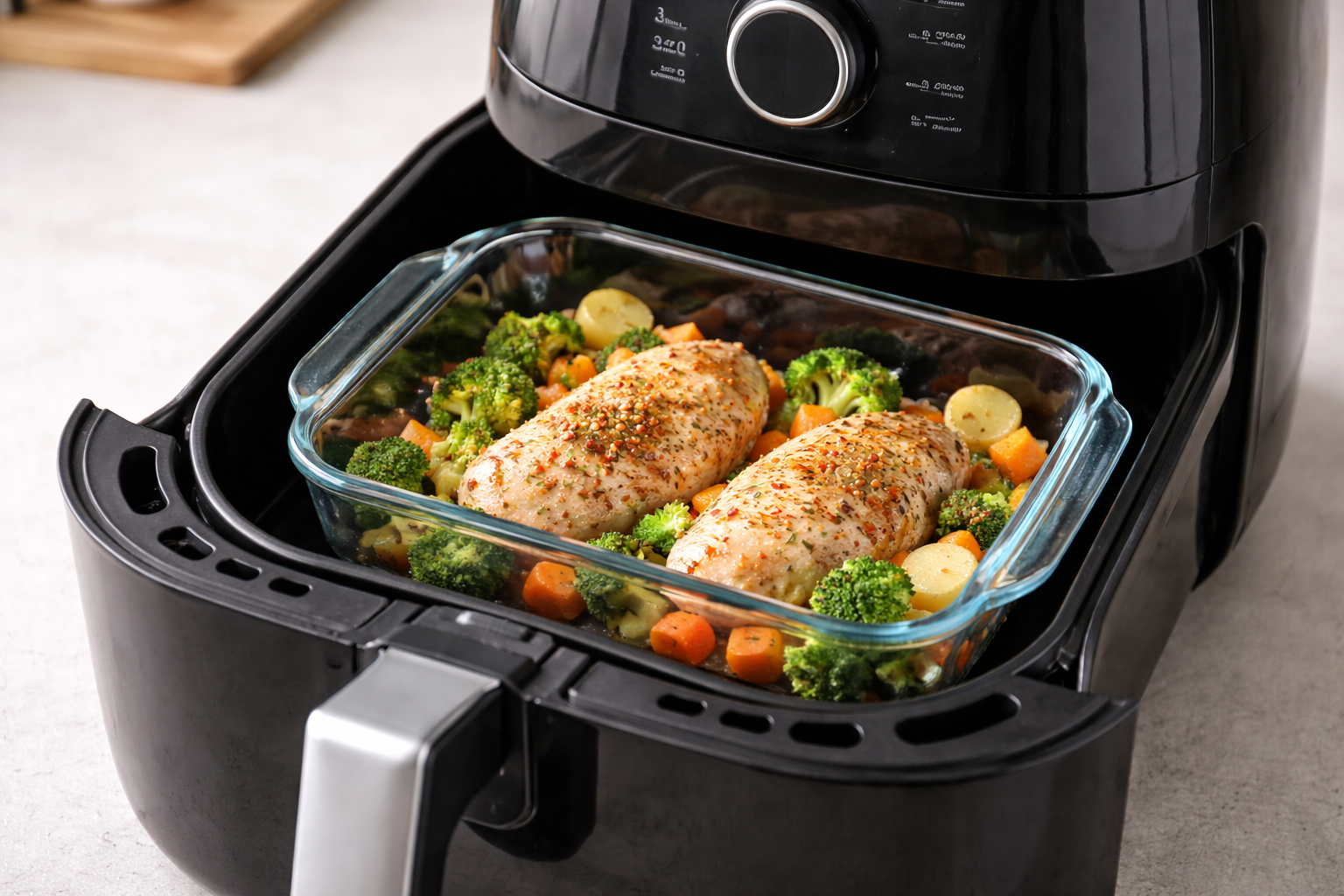
- Place a small oven-safe dish with water inside
- Use marinades or sauces instead of relying on water
If your meals tend to come out dry, it’s usually a technique issue rather than a moisture issue. This guide on why air fryer food turns out dry can help you fix that without needing water.
When You Should NOT Use Water in an Air Fryer
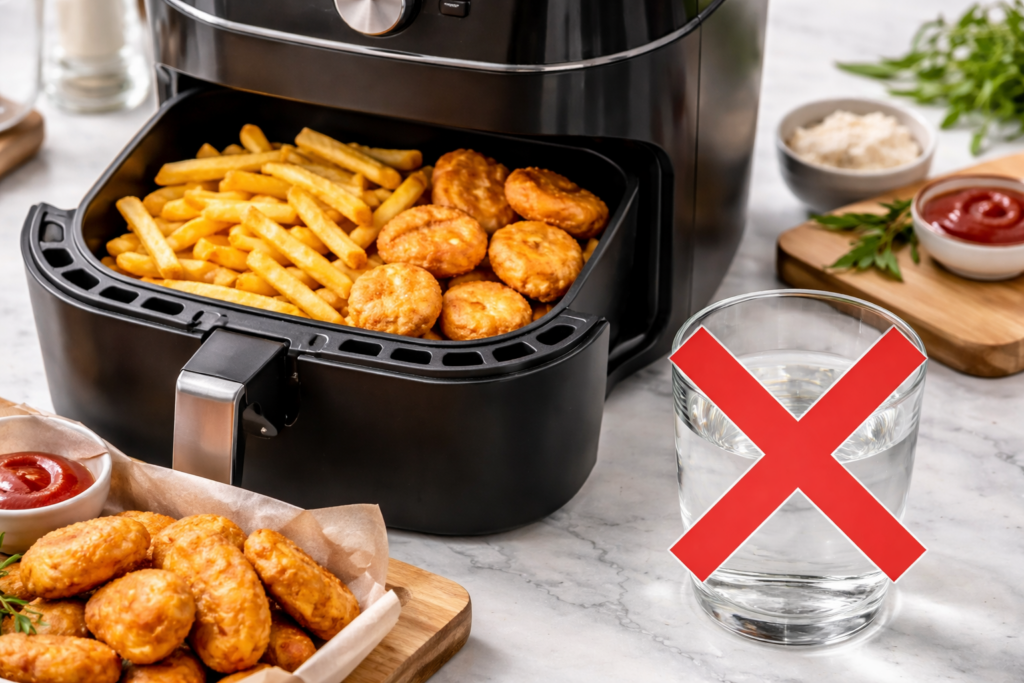
There are definitely situations where adding water can do more harm than good.
Avoid using water when:
- Cooking foods that need crispiness (fries, nuggets, breaded items)
- Preheating the air fryer
- Cooking at very high temperatures (200°C / 400°F)
- Using parchment paper or foil that could trap water
Water creates steam—and steam reduces crispiness. If your goal is crunchy food, skip the water.
How to Add Water Safely (Step-by-Step)
If you decide to use water, keep it simple and controlled.
Step-by-step method:
- Turn off and cool the air fryer before adding anything
- Remove the basket
- Add 2–4 tablespoons of water to the bottom drawer
- Place the basket back in
- Start cooking as usual
That’s it—no complicated setup needed.
Pro tip:
Never add more than a thin layer. Too much water can:
- Splash during cooking
- Interfere with airflow
- Damage internal parts over time
Can You Put Water in the Air Fryer for Cleaning?
Yes—and this is actually one of the most useful tricks.
Quick cleaning method:
- Fill the drawer with a small amount of warm water
- Add a drop of dish soap
- Let it sit for 10–15 minutes
- Wipe clean with a soft sponge
For deeper cleaning, especially if there’s buildup near the top, you’ll also want to clean the heating element carefully.
Does Water Damage an Air Fryer?
Used correctly, water won’t damage your air fryer. But misuse can cause problems.
Potential risks:
- Water reaching electrical components
- Rust over time if not dried properly
- Reduced performance due to trapped moisture
As long as you:
- Use small amounts
- Keep water away from the heating element
- Dry everything after cleaning
…you’ll be completely fine.
Better Alternatives to Using Water
In many cases, water isn’t the best solution—just the easiest one people think of.
Try these instead:
For smoke:
- Use less fatty cuts
- Clean the fryer more often
- Cook at slightly lower temperatures
For dryness:
- Lightly oil your food
- Don’t overcook
- Avoid overcrowding
For sticking:
- Use parchment paper or a liner
- Lightly grease the basket
You can also avoid many of these issues altogether by learning common air fryer mistakes people make and how to fix them early.
Can You Put Water with Food (Like Rice or Soup)?
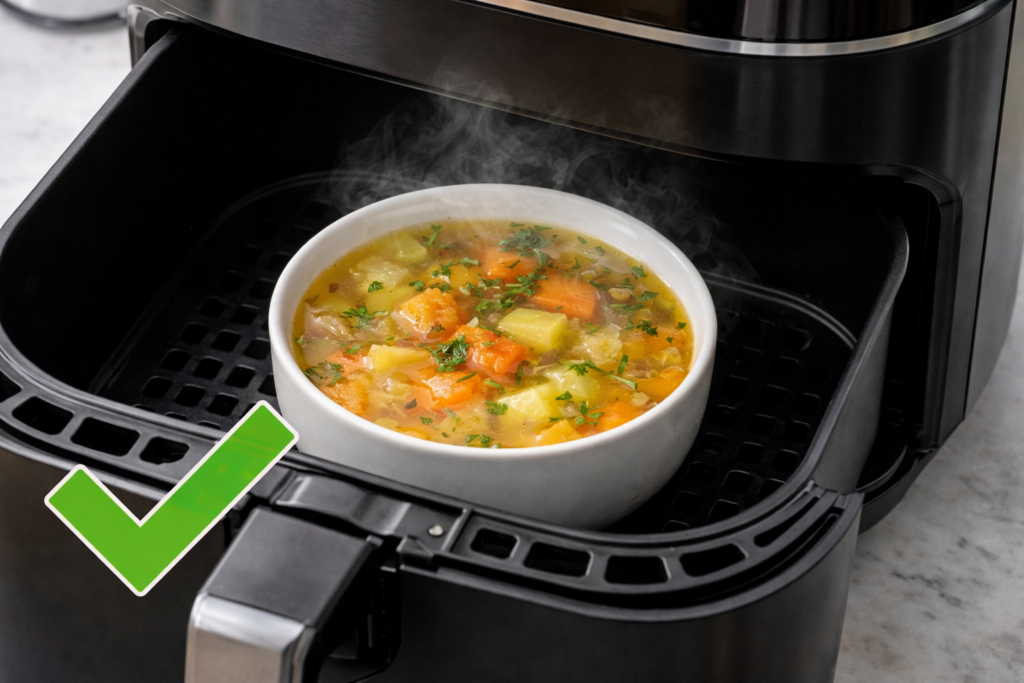
This is a gray area—and depends on how you do it.
You can cook foods with liquid, but only if:
- They’re in a heat-safe container
- The container fits properly without blocking airflow
For example:
- Small portions of rice
- Reheating soups or sauces
If you’re using containers, make sure they’re safe—this guide on whether glass can go in an air fryer can help you choose the right materials.
Tips to Get the Best Results Without Water
If your goal is better cooking results, focus on technique first.
Key tips:
- Preheat your air fryer (when needed)
- Don’t overcrowd the basket
- Shake or flip food halfway through
- Use a light spray of oil for crispiness
Water is a tool—but not a magic fix.
FAQs
Do you have to put water in an air fryer?
No, it’s not required. Most cooking is done completely dry. Water is only used in specific situations like reducing smoke or easing cleanup.
How much water should I put in the air fryer?
Just a small amount—usually 2–4 tablespoons. You only need enough to cover the bottom lightly.
Can I put water in the air fryer while cooking?
Yes, but only in the bottom drawer and in small amounts. Never pour water directly over food or into the heating area.
Will water make food less crispy?
Yes. Water creates steam, which reduces crispiness. Avoid using it when cooking foods like fries or breaded items.
Can I boil water in an air fryer?
Not effectively. Air fryers aren’t designed for boiling—they circulate hot air, not direct heat like a stovetop.
Conclusion
Using water in an air fryer isn’t wrong—it’s just misunderstood. In the right situations, like reducing smoke or making cleanup easier, a small amount of water can actually improve your experience. But for everyday cooking, especially when crispiness matters, it’s best to skip it.
The key is balance. Use water as a targeted solution, not a default habit. Focus on good cooking techniques first, and treat water as a backup tool when needed.
Once you understand how and when to use it, you’ll not only avoid common mistakes—you’ll get better, more consistent results from your air fryer every time.