Air fryers have changed the way we cook. Crispy fries, juicy chicken, roasted vegetables — all with little to no oil. But here’s the question almost every beginner asks: do you need oil for air fryer cooking, and if so, which one is best?
The confusion is understandable. Some recipes say “no oil needed.” Others recommend spraying everything. And then there’s the smoke issue, sticky baskets, and food that turns out dry instead of golden and crisp.
The truth? You can cook without oil in an air fryer — but using the right oil, in the right way, makes a big difference in texture, flavor, and overall results.
In this guide, you’ll learn exactly which oils work best, which ones to avoid, how much to use, and how to prevent common mistakes. Whether you’re roasting vegetables or making homemade nuggets, this article will help you get better results without overdoing the fat.
Best Oil for Air Fryer: Quick Comparison
Oil Type | Smoke Point | Flavor Profile | Best For | Air Fryer Rating |
Avocado Oil | ~520°F (270°C) | Neutral | High-heat cooking, vegetables, chicken | Excellent |
Refined Olive Oil | 400–470°F (204–243°C) | Mild | Roasting, Mediterranean dishes | Very good |
Canola Oil | ~400°F (204°C) | Neutral | Everyday cooking | Very good |
Grapeseed Oil | ~420°F (215°C) | Light | Seafood, vegetables | Very good |
Extra Virgin Olive Oil | ~375°F (190°C) | Fruity, strong | Lower temperature cooking | Good (low heat) |
Butter | ~300°F (150°C) | Rich | Finishing only | Not recommended |
Flaxseed Oil | ~225°F (107°C) | Nutty | Cold dishes only | Avoid |
Do You Really Need Oil for Air Fryer Cooking? The Honest Truth Most People Miss
Technically, no. Air fryers cook by circulating hot air at high speed, which creates a crispy outer layer similar to frying.
But in practice? A small amount of oil improves:
- Browning and crispiness
- Flavor
- Moisture retention
- Prevention of sticking
Without oil, some foods — especially vegetables — can turn out dry or slightly tough.
Think of oil in an air fryer as a finishing enhancer, not a deep-frying requirement. You’re using teaspoons, not cups.
The Best Oil for Air Fryer Cooking (Top High-Performance Picks)
When choosing oil for air fryer cooking, the most important factor is smoke point. Air fryers often operate between 350°F–400°F (175°C–200°C), so you need an oil that won’t burn at high heat.
Avocado Oil
- Smoke point: ~520°F (270°C)
- Neutral flavor
- Excellent for high-heat cooking
This is one of the best all-around options for air frying. It rarely smokes and doesn’t overpower your food.
Olive Oil (Refined or Light)
- Smoke point: 400–470°F (204–243°C)
- Mild flavor
Extra virgin olive oil works for lower temperatures, but for high-heat crisping, refined olive oil is more stable.
If you’re already cooking Mediterranean-style meals, this is a solid choice.
Canola Oil
- Smoke point: ~400°F (204°C)
- Neutral taste
- Budget-friendly
Reliable and affordable, especially for everyday use.
Grapeseed Oil
- Smoke point: ~420°F (215°C)
- Light texture
Great for vegetables and seafood.
Dangerous Mistakes: Oils You Should Never Use in an Air Fryer
Not all oils handle high heat well. Some break down quickly or create excessive smoke.
Avoid:
- Butter (burns fast)
- Flaxseed oil (very low smoke point)
- Unrefined coconut oil at high temperatures
- Aerosol cooking sprays
Aerosol sprays may seem convenient, but they can damage the non-stick coating of your basket over time. Instead, use a refillable oil sprayer or brush oil lightly onto food.
If your air fryer starts smoking, it may not always be the oil — but oil breakdown can contribute. If that happens, check out this guide on what to do when your air fryer unexpectedly shuts down and common causes behind it.
How Much Oil Do You Actually Need? The Simple Rule That Changes Everything
Here’s where many people go wrong — they use too much.
For most recipes, you only need:
- ½ to 1 teaspoon per serving
- Or a light mist spray coating
The goal is to lightly coat the food, not soak it.
Simple Rule of Thumb
If your food looks shiny but not dripping, you’re using the right amount.
For frozen foods like fries or nuggets, you often don’t need to add any oil at all because they already contain some.
When Oil Makes a Dramatic Difference in Crispiness
Some foods benefit more from oil than others.
Vegetables
Brussels sprouts, zucchini, carrots, and potatoes brown better with a light coating. Oil helps prevent dryness and improves caramelization.
Breaded Foods
Homemade breaded chicken or tofu needs oil to crisp properly. Without it, the coating can stay pale.
Lean Proteins
Chicken breast or white fish can dry out. A thin layer of oil helps seal in moisture.
If you’re experimenting with different dishes, you may also want to check a detailed breakdown of air fryer temperatures and cooking times to optimize results.
Spray, Brush, or Toss? The Smartest Way to Apply Oil for Perfect Results
The way you apply oil matters just as much as the type.
Best Methods
- Toss food in a bowl with oil before air frying
- Use a refillable oil sprayer
- Brush oil lightly onto the surface
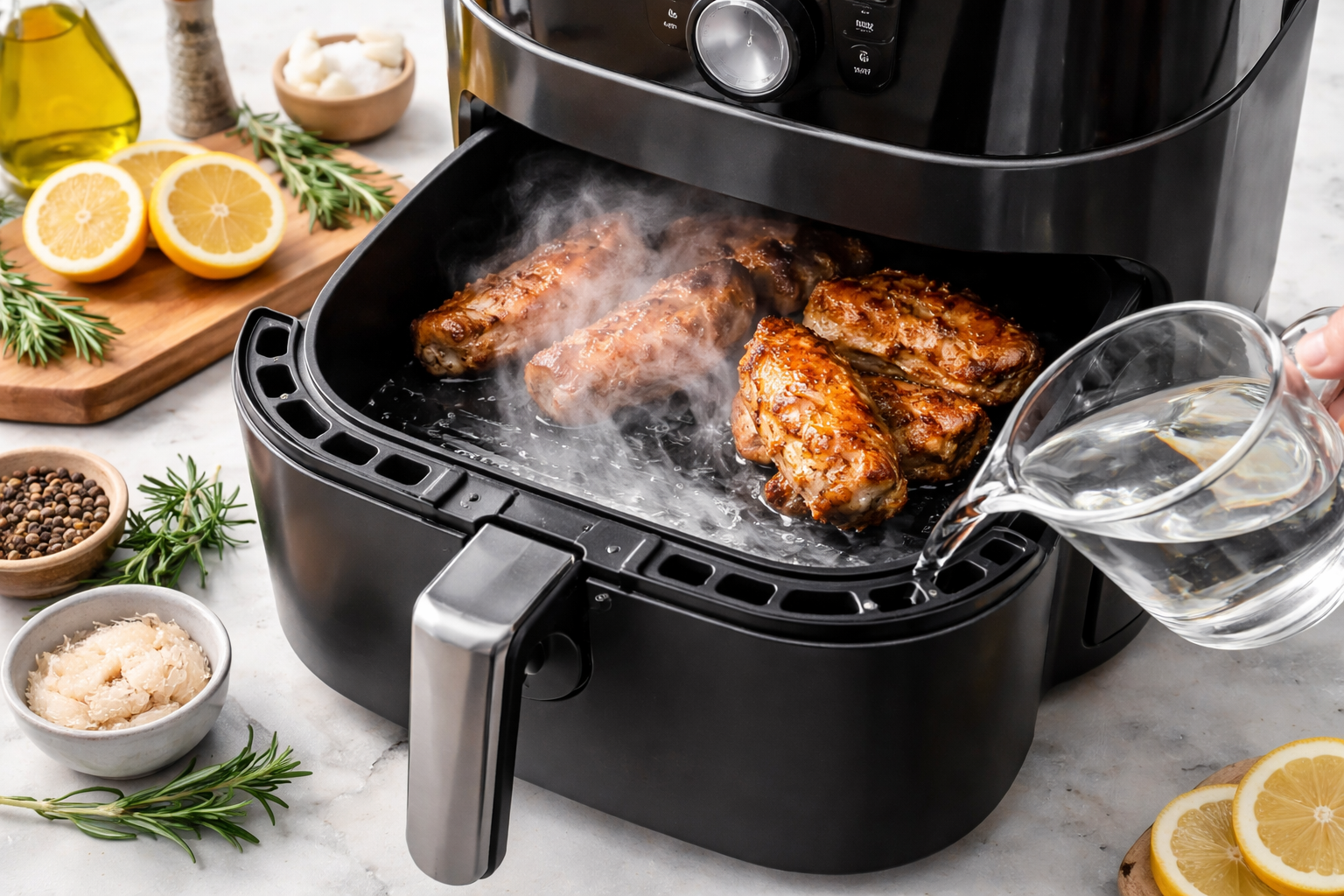
Avoid spraying directly into the empty basket — oil can drip onto the heating element and cause smoke buildup. If you’ve ever noticed residue forming inside, here’s a helpful guide on how to properly clean the heating element in your air fryer.
Keeping your basket clean also improves performance. A step-by-step cleaning guide can help you avoid grease buildup over time.
Does Using Oil Affect Electricity Usage?
Short answer: no significant difference.
Oil doesn’t impact energy consumption directly. However, proper oil use can help food cook more evenly, potentially reducing cooking time slightly.
If you’re curious about the bigger picture, you can compare how much electricity an air fryer uses compared to a traditional oven to understand overall efficiency.
Oil and Air Fryer Maintenance
Using oil incorrectly can lead to:
- Sticky basket buildup
- Smoke
- Burning smells
- Reduced airflow
To prevent this:
- Don’t exceed recommended temperatures
- Clean the basket after every use
- Avoid heavy, sugary marinades
If you notice stubborn grease, learning how to clean your air fryer basket properly will extend the life of your appliance.
You can also explore useful tools that make oil use easier, like refillable sprayers and silicone brushes in this guide to the best air fryer accessories.
Common Mistakes with Oil in an Air Fryer
Let’s quickly break down what not to do.
1. Using Too Much Oil
More oil doesn’t equal more crispiness. It can actually make food soggy.
2. Spraying the Basket Repeatedly
This damages the coating over time.
3. Ignoring Temperature Settings
Cooking too hot can cause oil to smoke. Always double-check recommended heat levels.
If you’re unsure whether your air fryer is powerful enough for certain recipes, understanding air fryer wattage can help you adjust expectations.
FAQ About Oil for Air Fryer
Can I use extra virgin olive oil in an air fryer?
Yes, but it’s best for lower temperatures (under 375°F). For higher heat, refined olive oil or avocado oil performs better.
Do I need oil for frozen fries?
Usually not. Most frozen fries already contain oil from pre-processing.
Why does my air fryer smoke when I use oil?
It could be oil exceeding its smoke point, grease buildup in the basket or food debris burning. Make sure to clean regularly and use high-smoke-point oils.
Is oil spray safe for air fryers?
Refillable sprayers are safe. Avoid aerosol cans with additives that may damage non-stick coatings.
Can I cook completely oil-free?
Yes. But expect slightly less browning and crispiness, especially with vegetables.
Final Thoughts: Finding the Right Balance
Using oil for air fryer cooking isn’t about adding unnecessary fat — it’s about improving texture, flavor, and overall results.
The key is choosing a high-smoke-point oil like avocado or refined olive oil and using it sparingly. A light coating is often all you need to transform dry, pale food into crispy, golden perfection.
When paired with proper temperature control and regular cleaning, oil becomes a simple tool — not a complication.
Start small, experiment, and adjust based on your results. Once you find your balance, your air fryer meals will taste better, look better, and feel just as healthy as you intended.