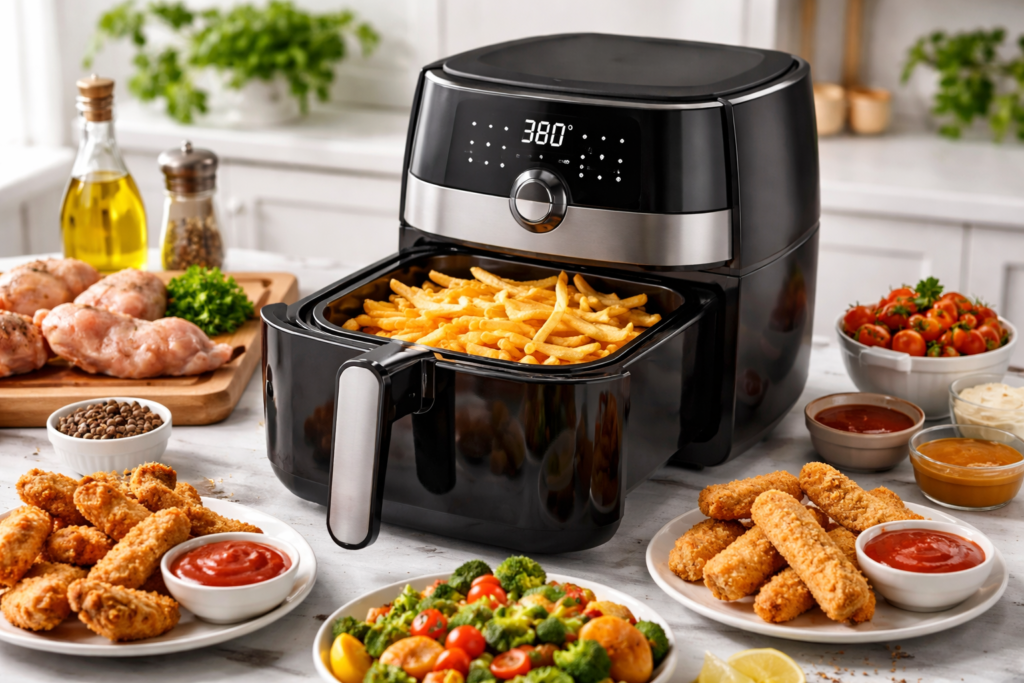
Using an air fryer for the first time can feel surprisingly confusing. You expected quick, crispy food—but instead you’re wondering: Do I need to preheat it? Why does it smell weird? How much food can I actually put in there?
If that sounds familiar, you’re in the right place.
The truth is, air fryers are incredibly easy to use—but only once you understand a few key basics. Most beginner mistakes (like soggy fries or uneven cooking) come down to airflow, temperature, and simple setup steps that many guides skip.
In this article, you’ll learn exactly how to use an air fryer for the first time step by step, what to expect during your first use, and how to avoid the most common mistakes. By the end, you’ll feel confident enough to cook your first meal—and actually get it right.
Before You Start: First-Time Setup (Don’t Skip This)
Your first use isn’t just about cooking—it’s about preparing the appliance properly.
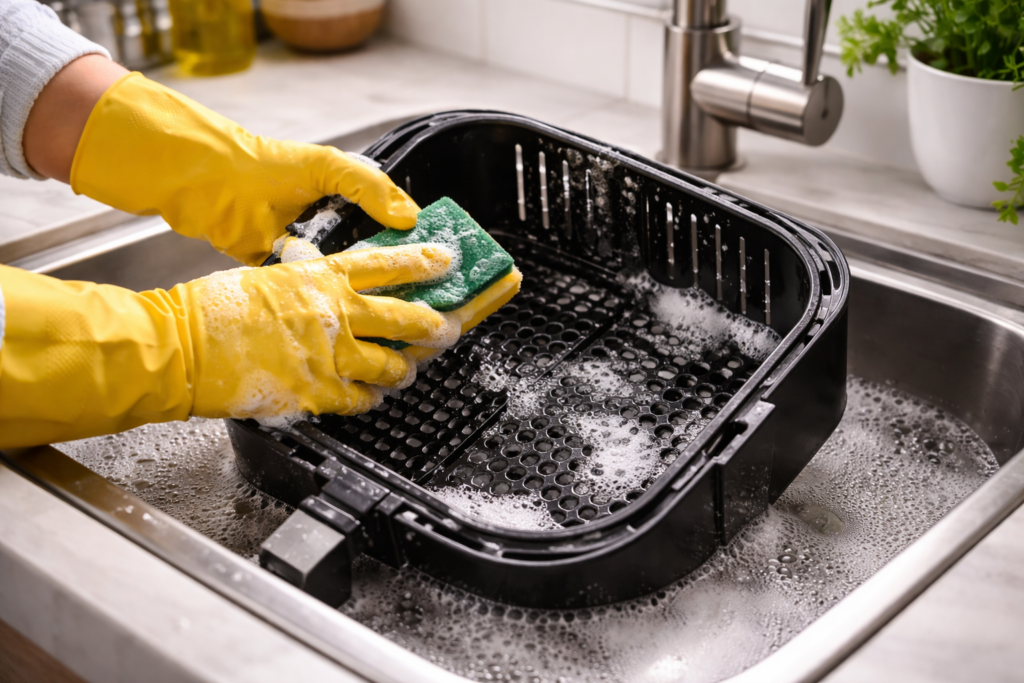
Wash the Basket and Tray
Always wash removable parts with warm soapy water. Even new units can have dust or factory residue.
Expect a Slight Smell
When you run your air fryer for the first time, you might notice a plastic or chemical smell. This is normal.
Run it empty:
- 180°C (350°F)
- 10–15 minutes
This burns off protective coatings used during manufacturing.
If the smell seems strong, this guide on why air fryers sometimes smell like plastic explains what’s normal and what’s not.
Set It Up in the Right Spot
Air fryers need space to breathe—literally.
- Keep at least 5–10 cm of space around it
- Avoid placing it under cabinets
- Use a heat-resistant surface
If you’re unsure, this quick guide on choosing the best place for your air fryer helps avoid common setup mistakes.
How to Use an Air Fryer for the First Time (Step-by-Step)
Let’s walk through your first cooking session.
Step 1: Preheat (Usually Worth It)
Not all air fryers require preheating—but it almost always improves results.
Preheating:
- Helps food cook evenly
- Makes things crisp faster
If you’re unsure, check this simple explanation of when preheating actually matters.
Step 2: Add Food (But Don’t Fill It)
This is where most beginners go wrong.
Air fryers work by circulating hot air around food. If you overcrowd the basket, that airflow gets blocked.
Rule of thumb:
- One layer = crispy
- Piled up = soggy
Step 3: Set Time and Temperature
If your air fryer doesn’t have presets, don’t worry—it’s simple.
Here’s a quick starting point:
- Frozen foods: 180–200°C
- Fresh vegetables: 170–190°C
- Reheating: 160–180°C
For more precise cooking, use this air fryer time and temperature guide to avoid guesswork.
Step 4: Shake, Flip, or Turn
Halfway through cooking:
- Shake fries
- Flip meat
- Stir vegetables
This ensures even browning on all sides.
Step 5: Check Early (Air Fryers Cook Fast)
Air fryers often cook faster than expected.
Check food:
- 2–3 minutes before timer ends
- Look for golden color and crisp edges
What to Cook First (Best Beginner Foods)
Start with foods that are forgiving and easy to get right.
Best First Recipes:
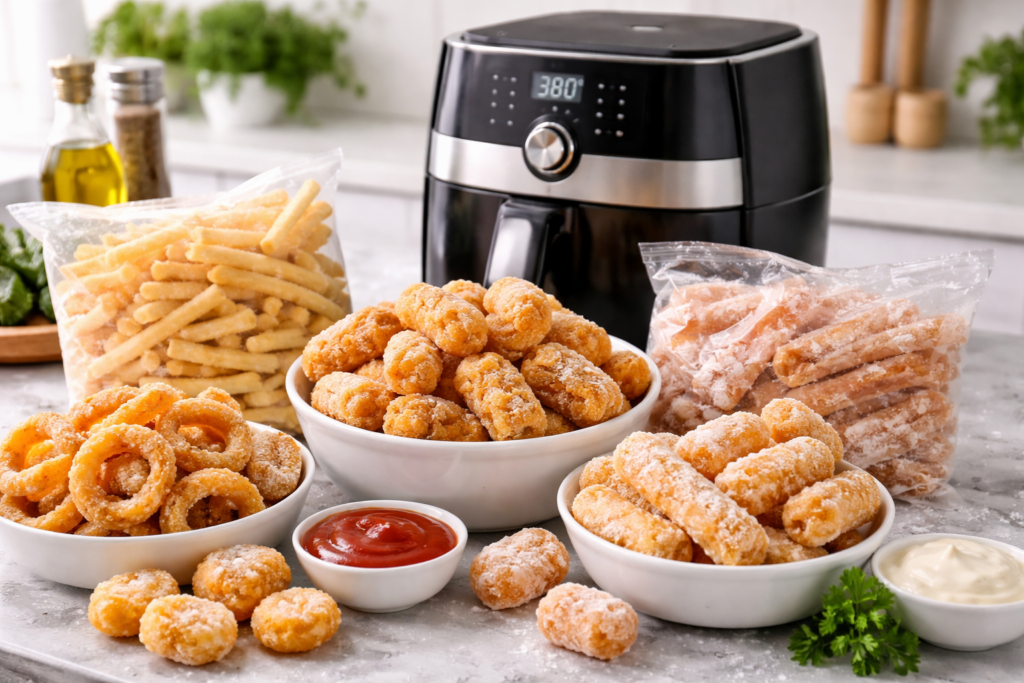
- Frozen fries
- Chicken nuggets
- Mozzarella sticks
- Broccoli or carrots
These help you understand:
- How fast your air fryer cooks
- How crispy results get
- When food is “done”
Common First-Time Mistakes (And How to Avoid Them)
Overcrowding the Basket
This is the #1 reason food turns out soft instead of crispy.
Too Much Oil
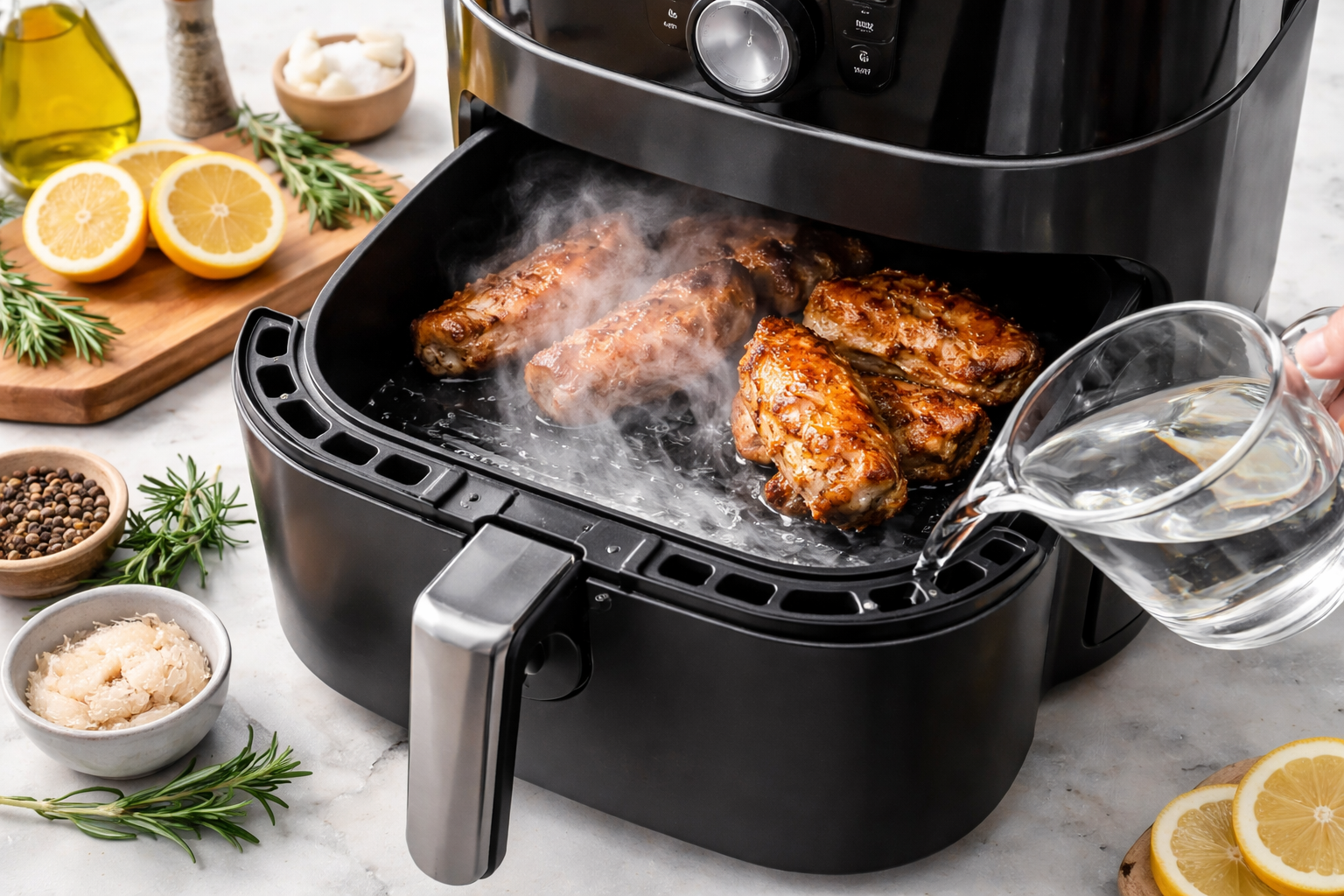
A light spray is enough. Excess oil can cause smoking. In some cases, people try adding a small amount of liquid to reduce smoke — but it’s important to understand when using water in an air fryer is actually helpful and when it should be avoided.
Ignoring Airflow
Air fryers are not mini ovens—they rely on circulation.
If you want a deeper understanding, this breakdown of how air fryers actually cook food makes everything clearer.
Skipping Safety Basics
Simple habits matter:
- Don’t block vents
- Don’t use wet batter
- Keep it away from walls
If you’re new, these beginner air fryer safety tips are worth reviewing.
Can You Use Foil or Parchment Paper?
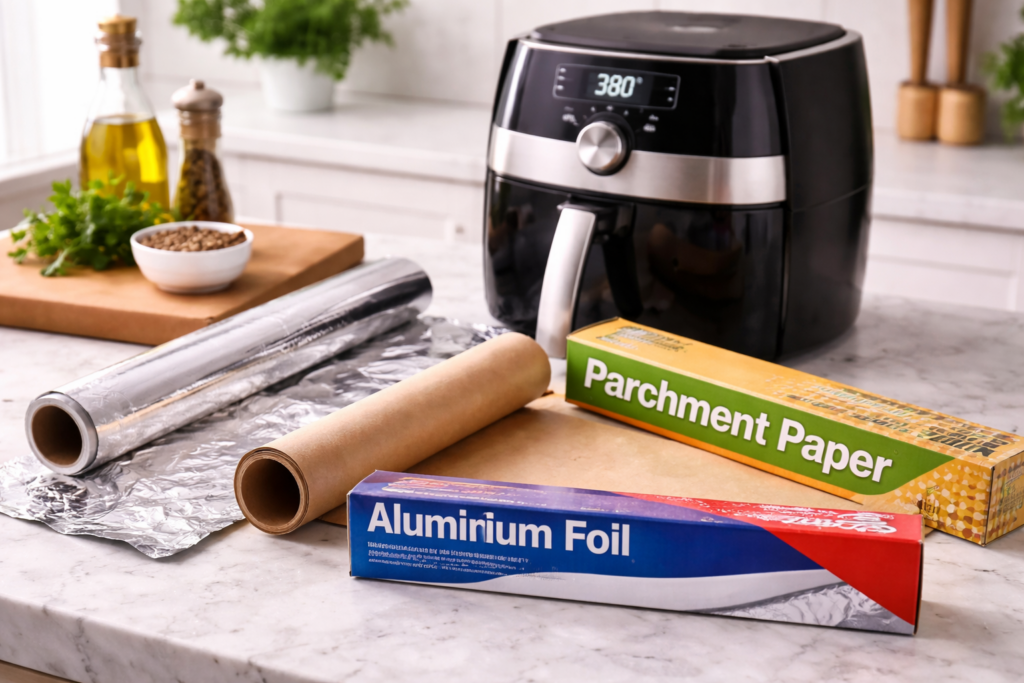
Yes—but carefully.
You can use:
- Aluminum foil
- Parchment paper
But:
- Never block airflow completely
- Always place food on top to hold it down
Here’s a full guide explaining when and how to safely use foil inside your air fryer.
Cleaning After Your First Use
Cleaning is easier than most people expect.
After Every Use:
- Let it cool
- Wash basket with warm water
- Wipe interior lightly
Why It Matters:
Grease buildup can:
- Cause smoke
- Affect taste
- Reduce performance
This simple air fryer basket cleaning guide walks you through it step by step.
What “Done” Actually Looks Like
This is something most guides don’t explain.
Look for:
- Golden brown color
- Crisp edges
- No visible moisture
Listen for:
- Light sizzling sound (good)
- Loud popping or smoking (check food)
Smell:
- Toasty = ready
- Burnt = too late
How to Get Better Results Fast
If you want to improve quickly:
- Cook in small batches
- Preheat when possible
- Shake more than you think you need
- Adjust time instead of temperature first
Within 3–5 uses, you’ll start to “feel” how your air fryer works.
FAQs
Do I need to run the air fryer empty first?
Yes, it helps remove factory residue and reduces initial odors.
Why does my air fryer smell on first use?
This is normal and usually disappears after 1–2 cycles.
Can I open it while cooking?
Yes, it’s completely safe and often necessary.
Why is my food not crispy?
Most likely causes: Skipping preheat, Overcrowding, Not enough heat
Is air frying healthier?
Yes—because it uses significantly less oil than deep frying.
Conclusion
Learning how to use an air fryer for the first time is less about complicated steps and more about understanding a few simple principles: airflow, spacing, and timing.
Once you get those right, everything becomes easier.
Start with simple foods, don’t overload the basket, and pay attention to how your air fryer behaves. After just a few uses, you’ll go from guessing to cooking with confidence.
And the best part? You’ll get crispy, satisfying results—without the mess, excess oil, or stress of traditional frying.