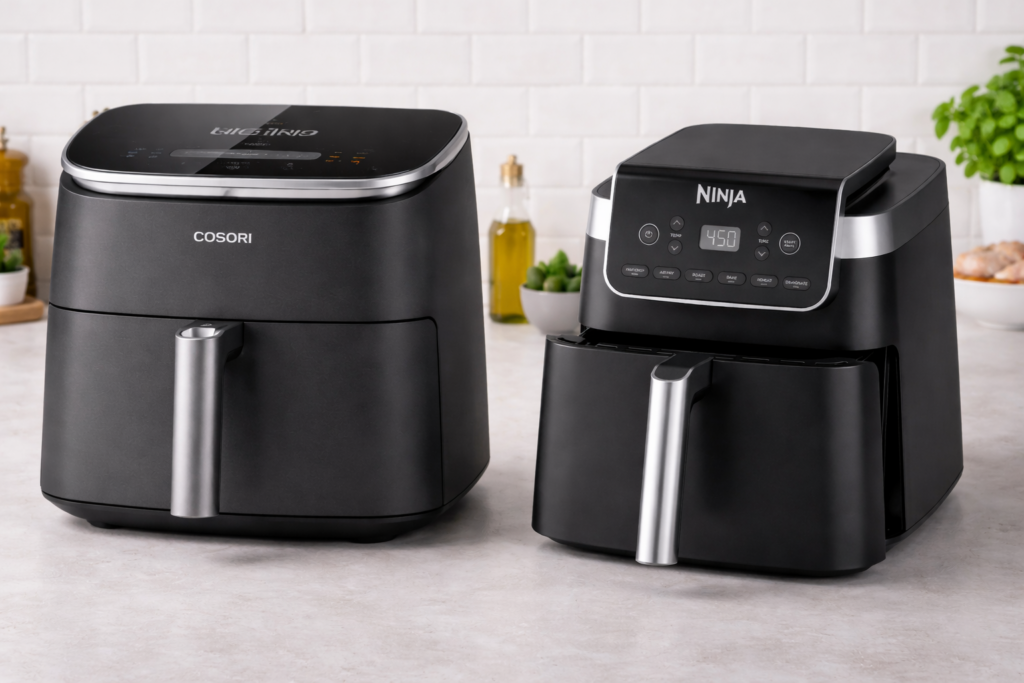
The Ninja Air Fryer AF181 and the Cosori 9-in-1 TurboBlaze Air Fryer are frequently compared because they promise similar things on paper: high heat, family-sized baskets, and faster cooking with less oil. In reality, they deliver those promises in very different ways, and those differences matter more than most spec sheets suggest.
The Ninja AF181 is built around raw power and simplicity. It’s designed for people who want fast results, deep crisping, and controls that don’t require a learning curve. The Cosori TurboBlaze takes a more technical and flexible approach, offering variable fan speeds, more cooking modes, and a ceramic-coated basket aimed at health-conscious buyers.
This article is written for beginners and intermediate home cooks who want to know how these air fryers behave day after day, not just during a first test run. The goal isn’t to crown a winner, but to help you choose the machine that fits how you actually cook.
Quick Comparison Table
Feature | Ninja Air Fryer AF181 | Cosori 9-in-1 TurboBlaze |
Capacity | 6.5 qt (round, deep) | 6 qt (square, wide) |
Power | ~1750 W (learn how air fryer wattage affects cooking performance) | ~1725 W |
Max Temp | 450°F | 450°F |
Fan System | Single, high-speed | 5-speed TurboBlaze |
Presets | 6 | 9 |
Basket Coating | Nonstick (ceramic-based) | Ceramic, PFOA/PTFE-free |
Noise | Loud at high heat | Quiet (≤53 dB) |
Exterior Heat | Gets hot | Stays relatively cool |
Typical Price | Mid-range | Mid-range (often slightly lower) |
| ; | ; |
Design & Build Quality
Ninja Air Fryer AF181
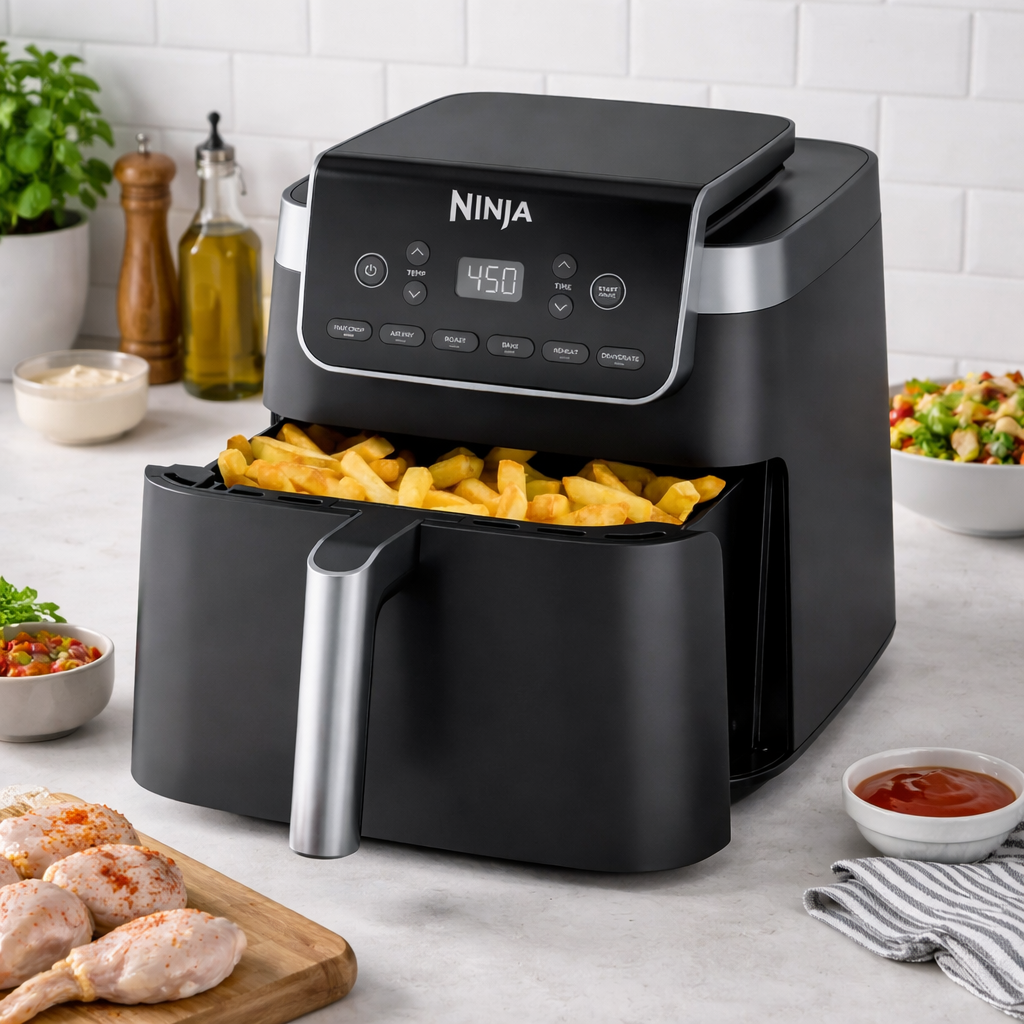
The Ninja AF181 feels like a tool, not a gadget. The exterior is metal with sturdy plastic trim, and while it’s lighter than it looks, it doesn’t feel flimsy. Many users coming from toaster ovens or older air fryers note that it looks smaller than it is — the depth of the basket allows you to cook more than expected.
The round, deep basket favors foods like wings, fries, drumsticks, and vegetables tossed in oil. It’s less ideal for flat foods like toast or pizza slices, which may overlap.
Controls are physical buttons, and this matters more than it sounds. There are no menus, no icons, no remembering which symbol means what. For many users — especially first-time air fryer owners — this lowers friction immediately.
However, Ninja’s design also means:
- No viewing window
- No automatic pause that preserves your settings when you pull the basket out
- Fewer “smart” safeguards
If you like Ninja’s design language, you’ll recognize this approach from other models like the Ninja DZ201 Foodi, which prioritizes power and direct control over finesse.
Cosori 9-in-1 TurboBlaze
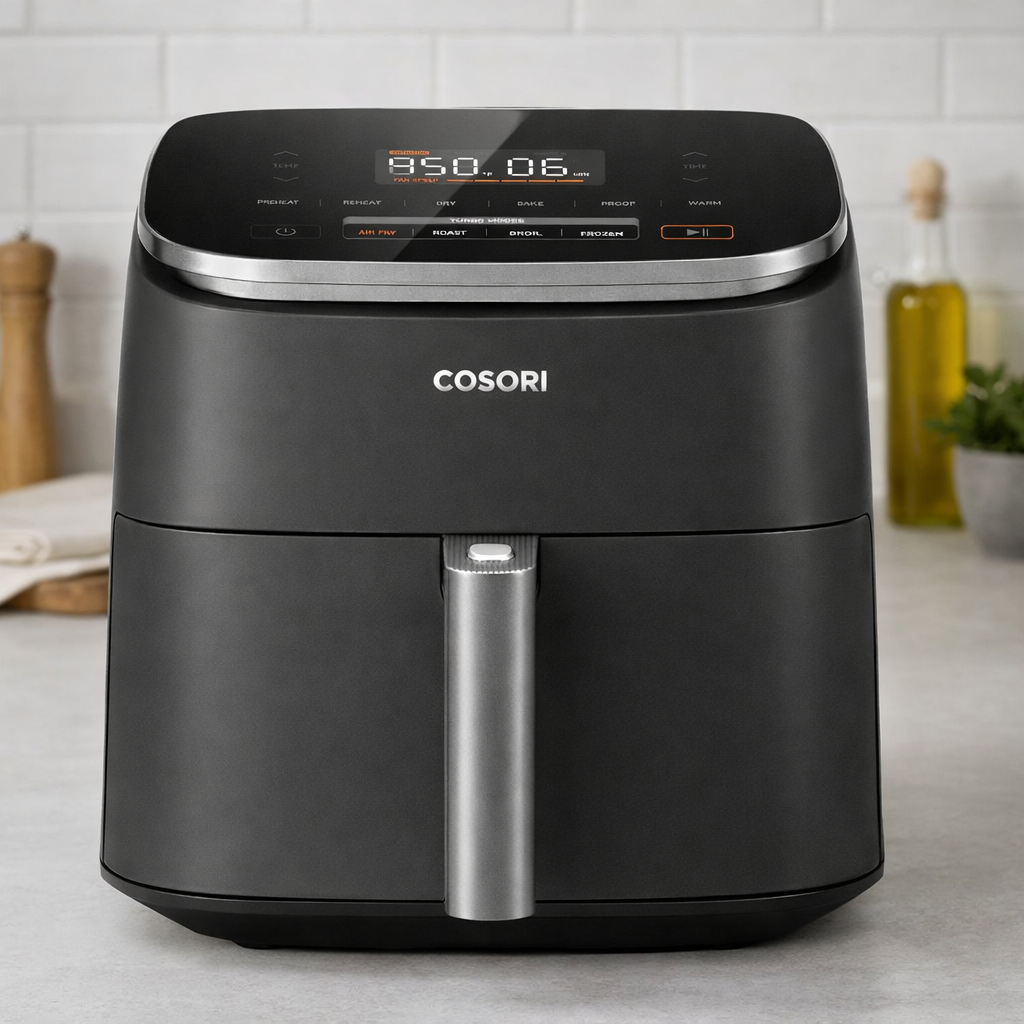
The Cosori TurboBlaze feels more like a modern countertop appliance. The digital display uses clear text labels instead of icons, something many users explicitly praise. When you’re half-asleep making breakfast, “Bake” is easier to understand than a chicken symbol.
The square basket is one of its strongest design advantages. It allows:
- Better single-layer cooking
- Easier placement of fish, toast, and vegetables
- More predictable airflow across flat foods
The ceramic coating is a major differentiator. Buyers concerned about nonstick chemicals often choose this model specifically because it’s marketed as PFOA and PTFE free.
Build quality is solid, and the exterior stays cooler than the Ninja during use — a small but meaningful detail for households with kids.
For a broader look at Cosori’s design philosophy, the Cosori 9 TurboBlaze review goes deeper into materials and interface decisions.
Cooking Performance (Where the Real Differences Appear)
Heat Behavior: Power vs Control
The Ninja AF181 delivers heat aggressively and immediately. In Max Crisp mode, it behaves closer to a compact convection broiler than a gentle air fryer. This is why so many users report excellent results with wings and fries — and also why beginners sometimes burn food early on.
Several real-world observations show up repeatedly:
- Foods cook faster than expected
- Recipes often need lower temperatures
- Timing errors are punished quickly
The Cosori TurboBlaze, by contrast, spreads heat more intelligently. The multi-speed fan allows lower airflow early in cooking, which helps moisture retention and prevents lightweight foods from shifting or drying out.
This difference explains many user comments:
- Ninja = “amazing once you learn it”
- Cosori = “good results almost right away”
Crispiness vs Moisture Retention
Ninja AF181
- Outstanding exterior crisp
- Excellent browning
- Higher risk of dryness if unattended
Cosori TurboBlaze
- Slightly less aggressive crisp
- Better interior moisture
- More forgiving with lean meats and vegetables
This isn’t a flaw in either machine — it’s a design choice.
Common Foods, Compared Honestly
French Fries
- Ninja: Fast, deeply crisp, almost restaurant-style
- Cosori: Evenly cooked, slightly softer unless fan speed is increased
Chicken Wings
- Ninja: One of its best use cases — crispy skin with minimal oil
- Cosori: Excellent, but usually needs longer or higher fan speed
Frozen Pizza & Burritos
- Ninja: Can scorch toppings if not adjusted
- Cosori: More predictable, especially using Frozen or Bake modes
Vegetables
- Ninja: Great for hearty vegetables if shaken often
- Cosori: Better for delicate or lightly oiled vegetables
If you’re new to adjusting air fryer temps, referencing air fryer temperature and time guides can shorten the learning curve significantly for both machines.
Ease of Use & Cleaning
Learning Curve
- Ninja: Extremely simple, but less forgiving
- Cosori: More settings, but easier to get “good enough” results early
Beginners who don’t want to think much often prefer Ninja after a short adjustment period. Beginners who want guardrails often feel more comfortable with Cosori.
Cleaning Reality
Both baskets are technically dishwasher safe, but most users hand wash.
- Ninja: Food releases easily, but grease can build around the crisper plate
- Cosori: Ceramic coating releases food extremely well, but strong airflow can splatter grease higher up the walls
Neither is difficult to clean, but Cosori benefits from less scrubbing overall.
Noise & Energy Efficiency
The Ninja AF181 is noticeably loud, especially at high temperatures. It’s not broken — it’s just moving a lot of air very fast.
The Cosori TurboBlaze is surprisingly quiet, even at higher fan speeds. Many users note they can hold a conversation while it runs.
Energy usage is similar due to similar wattage, but both are far more efficient than heating a full oven for small meals. For context, see air fryer electricity usage vs oven comparisons.
Pros and Cons
Ninja Air Fryer AF181
- Exceptional crisping power
- Very fast cooking
- Simple, tactile controls
- Great for frozen and pre-cooked foods
Cosori 9-in-1 TurboBlaze
- Variable fan speeds
- Ceramic, PTFE/PFOA-free coating
- Quiet operation
- More versatile cooking modes
Ninja Air Fryer AF181
- Easy to overcook
- Loud operation
- Fewer control options
- Exterior gets hot
Cosori 9-in-1 TurboBlaze
- Strong airflow can lift parchment paper
- Broil mode can splatter grease
- More complexity than some beginners want
- Mixed customer service experiences reported
Which One Should You Choose?
Choose the Ninja AF181 if you:
- Eat a lot of frozen or pre-cooked foods
- Want maximum crispiness
- Prefer physical buttons
- Don’t mind adjusting temperatures manually
Choose the Cosori TurboBlaze if you:
- Cook a wider range of foods
- Care about ceramic coatings
- Want quieter operation
- Prefer flexibility over brute force
This isn’t about “better.” It’s about how much control you want versus how much power you’re comfortable managing.
Frequently Asked Questions (FAQ)
Is 450°F actually useful?
Yes — but mostly for wings, fries, and finishing. It’s easy to misuse.
Which one is better for apartments?
Cosori, due to lower noise and cooler exterior.
Do either replace an oven?
For small meals, yes. For baking trays of food, no
Which is better for beginners?
Cosori is more forgiving; Ninja rewards attention
Final Take
The Ninja AF181 feels like a performance tool: fast, powerful, and unforgiving. The Cosori TurboBlaze feels like a refined appliance: adaptable, quieter, and easier to live with.
Neither is perfect. Both are very good — for different cooks.