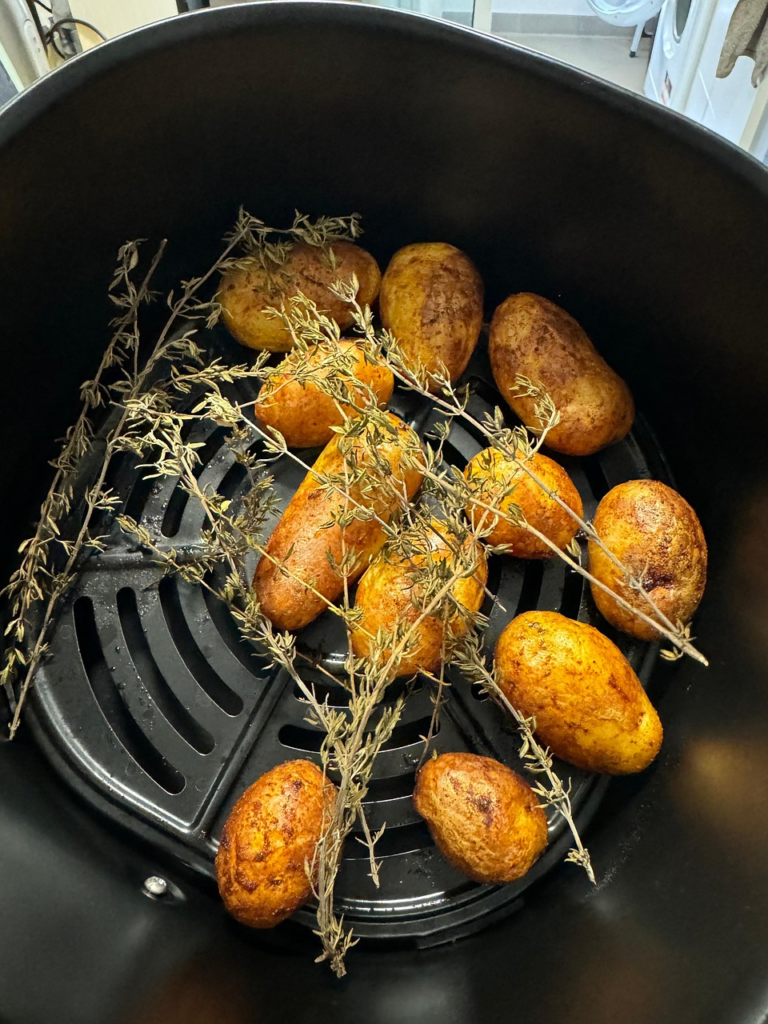
An air fryer is a convenient kitchen appliance that can make food lower in fat and healthier by using much less oil. However, a common problem many people face when using an air fryer is dry food. Why don’t air-fried French fries turn out crispy, and why does the meat come out dry? Let’s break down why this happens and how to avoid it. We’ll also look at small, everyday mistakes that many users make without even realizing it — especially beginners.
Why does an air fryer dry out food?
Many air fryer users notice that meat or fish sometimes turns out less juicy than when cooked in an oven or on a stovetop. The main reason dryness occurs is the cooking method itself, so understanding how does an air fryer work is essential.
Overcooked or overly dry food can indicate temperature issues that sometimes lead to automatic shutdowns. If your air fryer stops mid-cycle, this article explains why air fryers turn off by themselves and how incorrect settings play a role.
Cooking results also depend heavily on airflow and how food is arranged inside the basket. There are several key mistakes that can cause food to come out dry in an air fryer. Let’s take a closer look.
1. Cooking time and temperature
In any recipe, choosing the right temperature and cooking time is just as important as using the correct ingredients. If the temperature is too low or the cooking time is too short, the food will be undercooked. If the temperature is too high or the food cooks for too long, it can easily burn. Even a difference of 5–7 minutes can be critical: the dish may stay juicy or become dry and tough. Classic air fryer recipes don’t always work as expected—often the suggested time and temperature are too high. This is especially noticeable with foods like pizza in an air fryer, where models from our best air fryer for pizza guide cook more evenly and keep the crust from drying out.
This is why following tested air fryer temperatures and times is especially important, rather than relying on generic oven recipes.
2. Overloading the air fryer basket
This issue is closely related to the previous one. Even with the correct temperature and time, using too many ingredients at once can cause food to remain undercooked. Many people try to fill the basket as much as possible.
An air fryer cooks using active hot air circulation, which requires free space. When the basket is overloaded, air cannot circulate evenly: heat builds up at the top and doesn’t reach the lower layers. As a result, food may dry out on the surface while staying pale or undercooked underneath.
3. Choosing the wrong type of meat
The type and structure of meat play a major role. Not all cuts are equally suitable for an air fryer. Lean cuts—such as chicken breast or turkey—contain very little fat and lose moisture quickly, so they can dry out easily even at lower temperatures. Juicier cuts like chicken thighs, pork, or duck retain moisture better because the fat helps keep the juices inside. That’s why dry results are much more noticeable when cooking very lean meat.
For example, recipes like chicken drumsticks with potatoes work especially well in an air fryer because darker meat stays juicy while the potatoes crisp up evenly.
4. Ignoring the need to flip or shake food
If you look at air fryer recipes, you’ll notice that they often recommend flipping or shaking the food once or even several times during cooking. This is because the air at the top of the basket is much hotter and cools as it moves downward.
Turning food regularly helps it cook evenly on all sides.
Skipping this step often leads to one side drying out faster than the other.
5. Using the wrong accessories
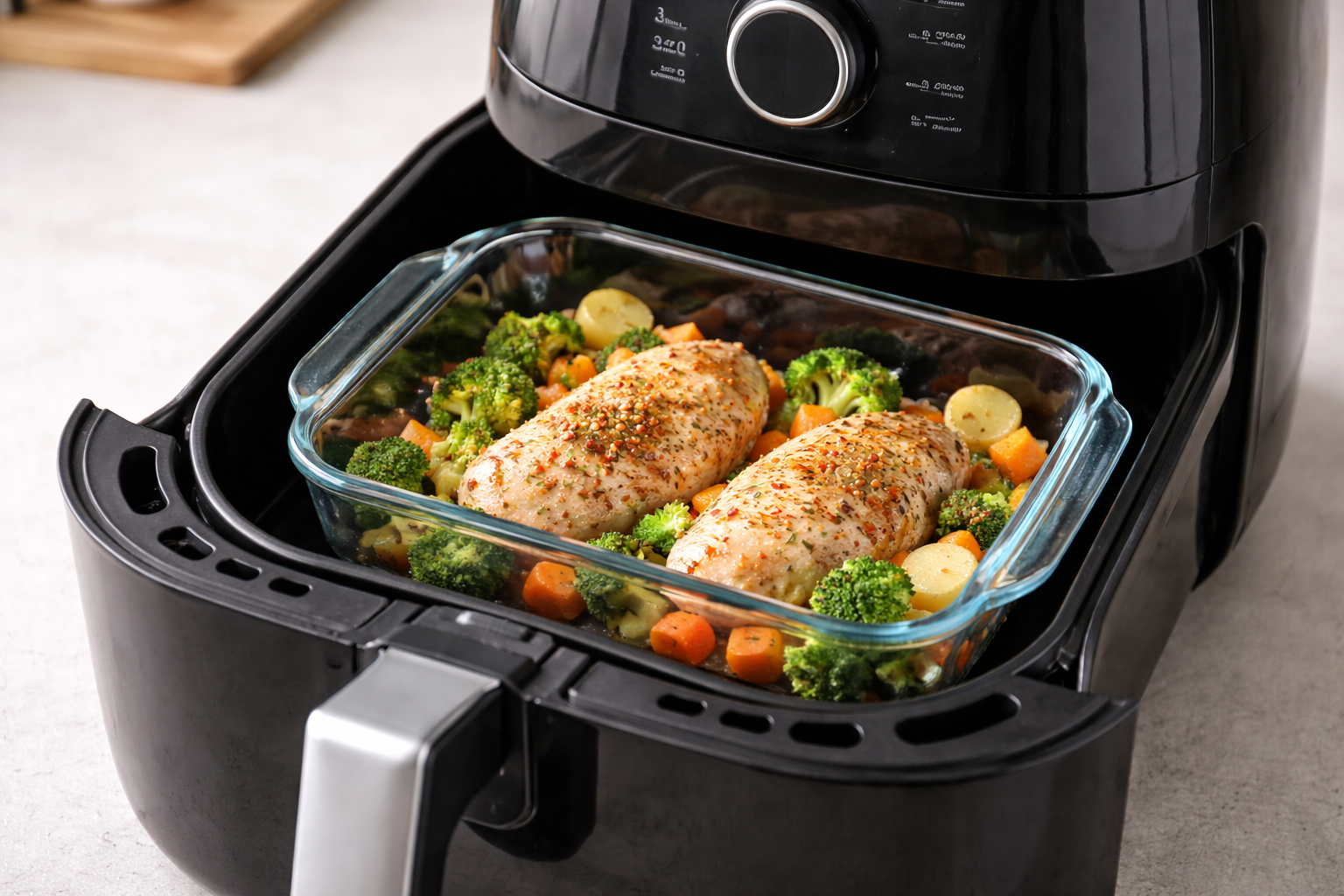
Accessories should be chosen very carefully. Some can simply ruin a dish, while others may be dangerous for the appliance itself. Foil, parchment paper, and oven bags cannot be used in all air fryers. Strong airflow can lift these materials, ruin the food, and pull them toward the heating element, which is unsafe. Using liners the wrong way can block airflow and dry out food, which is why this guide on parchment paper in an air fryer explains how to use it without affecting texture.
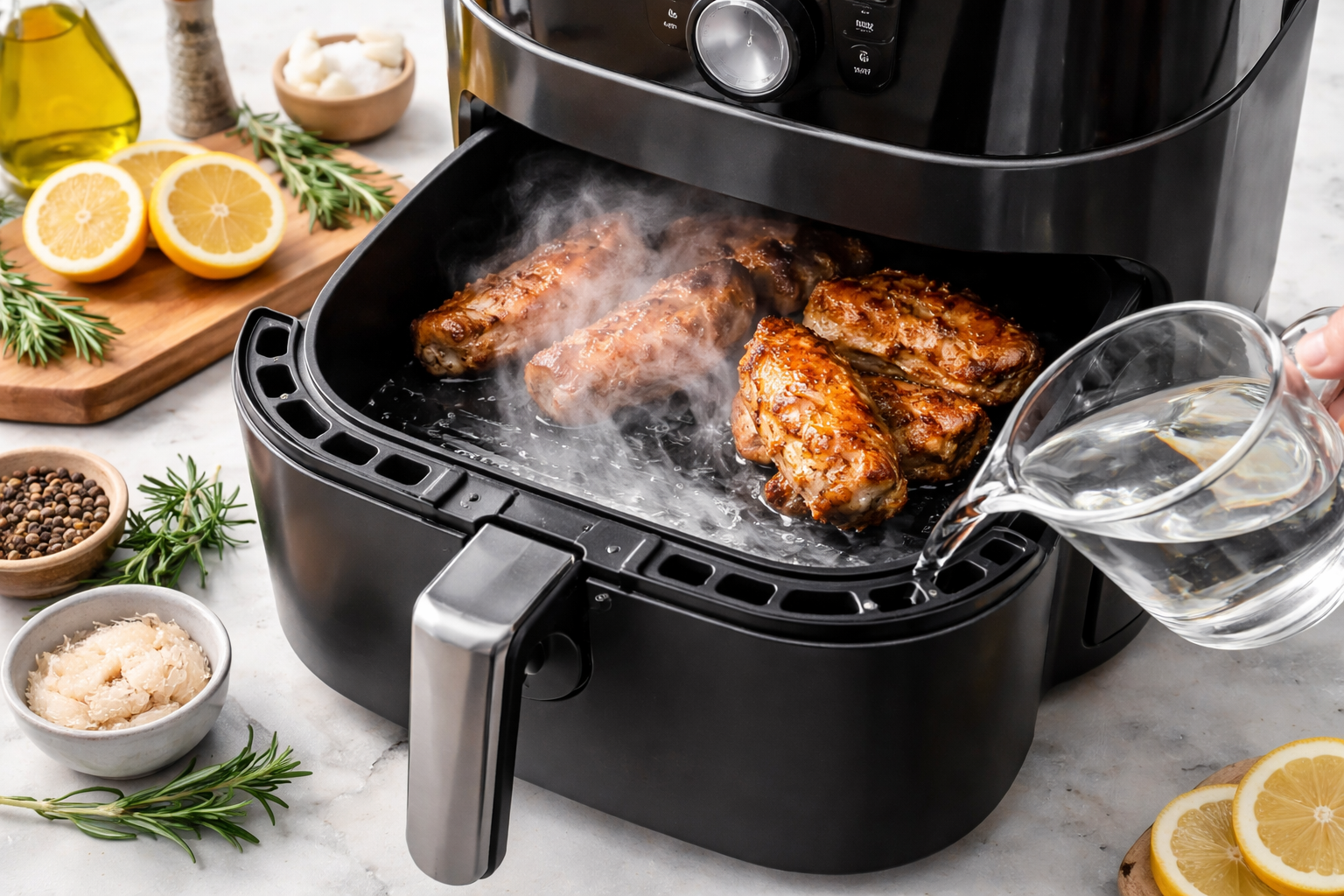
Some people try to trap moisture using liners, but before doing so, make sure you know if you can put aluminum foil in an air fryer safely. In some cases, adding a small amount of liquid underneath can help with moisture — but it’s important to understand when using water in an air fryer actually works and when it doesn’t.The safest option is to use accessories recommended by the manufacturer. Silicone and metal pans work best—just make sure they are the right size.
6. Not cleaning the air fryer regularly
Grease, crumbs, and food residue gradually build up inside the basket. If the air fryer isn’t cleaned after each use, unpleasant odors will appear over time and affect the taste of your food.
Old grease can also burn faster, making food dry out sooner during cooking.
Should You Preheat an Air Fryer?
Preheating is another factor that affects moisture. Starting food in a fully hot air fryer can sometimes cause the outer layer to dry out too quickly.
If you’re unsure when preheating helps and when it doesn’t, this guide on do you have to preheat an air fryer explains how preheating impacts texture and moisture.
In many cases, skipping preheating for delicate foods helps preserve juiciness.
Tips to keep food from turning dry
- Use the built-in programs on your air fryer. They are designed for your specific appliance and don’t require manual adjustments. It’s best when there are multiple programs—for meat and fish, potatoes and vegetables, baking, and stewing.
- Look for recipes created specifically for air fryers—they’re easy to find online.
- If a recipe isn’t designed for an air fryer, start with a lower temperature or shorter cooking time. Increase gradually if needed—about 10°F and 5 minutes at a time.
- Pay attention to the ingredient weight listed in the recipe and don’t exceed it.
- Don’t try to cook too much at once. It’s better to split food into multiple batches.
- Watch not only the quantity of food, but also how it’s arranged in the basket or pan. Leave space between pieces so air can circulate properly.
- For a better crust—especially on meat or potatoes—flip the food with tongs or gently shake the basket halfway through cooking.
- After each use, wash the basket, rack, and inner walls. This takes about 5 minutes, especially if done right away before residue dries. Regular cleaning helps extend the life of your air fryer and keeps your food tasting great.
Many dryness issues also come down to airflow design, basket size, and temperature control — which is why understanding how to choose the right air fryer can make a big difference in how juicy your food turns out.
Frequently Asked Questions
Is it normal for air fryer food to be drier than oven food?
Yes. Air fryers remove moisture faster than ovens. While this is great for crispiness, it can make foods dry if temperature and time aren’t adjusted properly.
Does cooking at too high a temperature dry out food?
Absolutely. High heat can crisp the outside before the inside cooks, leading to dryness. Lowering the temperature and cooking slightly longer often gives juicier results.
Can not using oil make food dry?
Yes, especially when cooking lean meat, vegetables, or potatoes. A small amount of oil helps lock in moisture and promotes browning. If you’re unsure which options work best, read our guide on choosing the right oil for air fryer cooking to understand smoke points and how different oils affect texture.
Does overcrowding cause dry food?
Yes. Overcrowding prevents proper airflow, causing uneven cooking. Some pieces may overcook while others stay underdone, resulting in dry or tough food.
Can frozen food come out dry in an air fryer?
Yes. Frozen foods can dry out if cooked too long or without oil. Lightly spraying oil and following air fryer–specific cooking times helps avoid dryness.