Do you have to preheat an air fryer, or is that just another leftover rule from oven cooking?
If you’ve searched this question, you’ve probably noticed conflicting advice. Some recipes insist on preheating. Others skip it entirely. And many air fryers don’t even explain whether preheating is necessary at all. Part of the confusion comes from not fully understanding how an air fryer works compared to a traditional or convection oven.
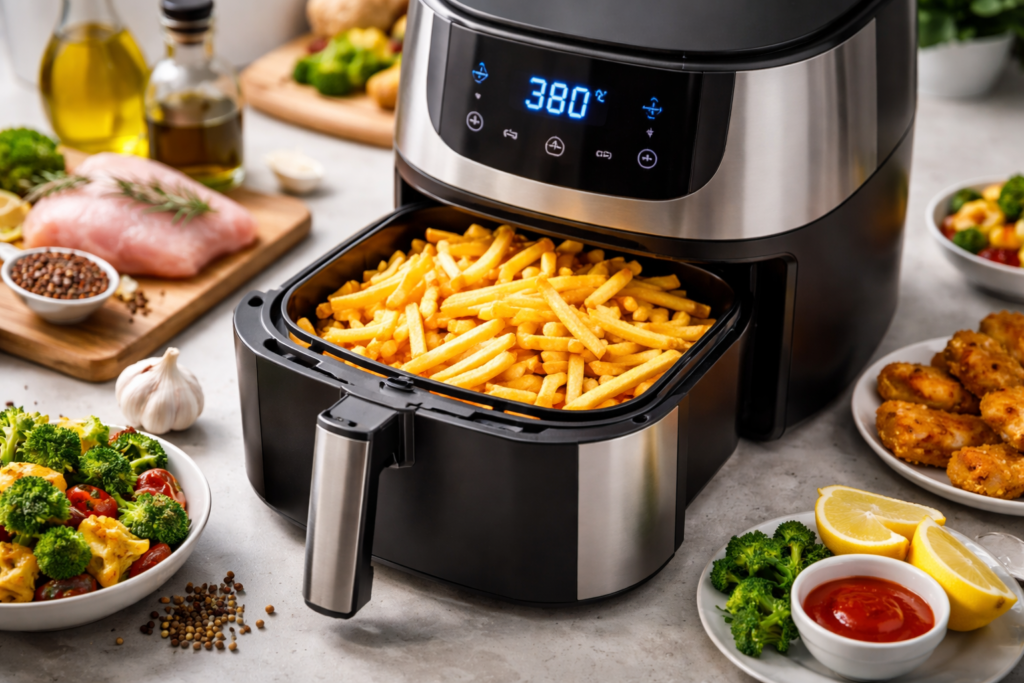
The confusion makes sense. Air fryers don’t behave like traditional ovens. They heat faster, cook smaller portions, and rely on rapid air circulation instead of slow radiant heat. Applying oven rules blindly often leads to dry chicken, uneven fries, or wasted electricity.
The truth is simple but nuanced: preheating an air fryer is optional—and only useful in specific situations. Knowing when to preheat (and when not to) can improve texture, save time, and prevent overcooking. If you’re just starting out, it also helps to understand the basic workflow of using an air fryer so these decisions feel more intuitive.
In this guide, you’ll learn exactly when preheating helps, when it hurts, and how to decide based on food type, air fryer style, and cooking goal—without guesswork or unnecessary steps.
What Preheating an Air Fryer Really Does
Preheating an air fryer means running it empty for a short time—usually 2 to 5 minutes—until the cooking chamber reaches the target temperature.
Unlike ovens, air fryers:
- Heat extremely fast
- Have small cooking chambers
- Circulate hot air aggressively
This rapid circulation is the core of how an air fryer works, and it’s why preheating plays a much smaller role than it does in conventional ovens.
This means preheating doesn’t serve the same purpose it does in baking ovens. Instead, it mainly affects surface texture, not internal doneness.
Preheating helps food start cooking immediately on contact with hot air, which can matter for certain textures—but not all foods need that shock of heat. Not sure if you should preheat your air fryer for pizza? Our frozen pizza guide explains when preheating helps and how to achieve the perfect crispy, melty results.
Do You Have to Preheat an Air Fryer Every Time?
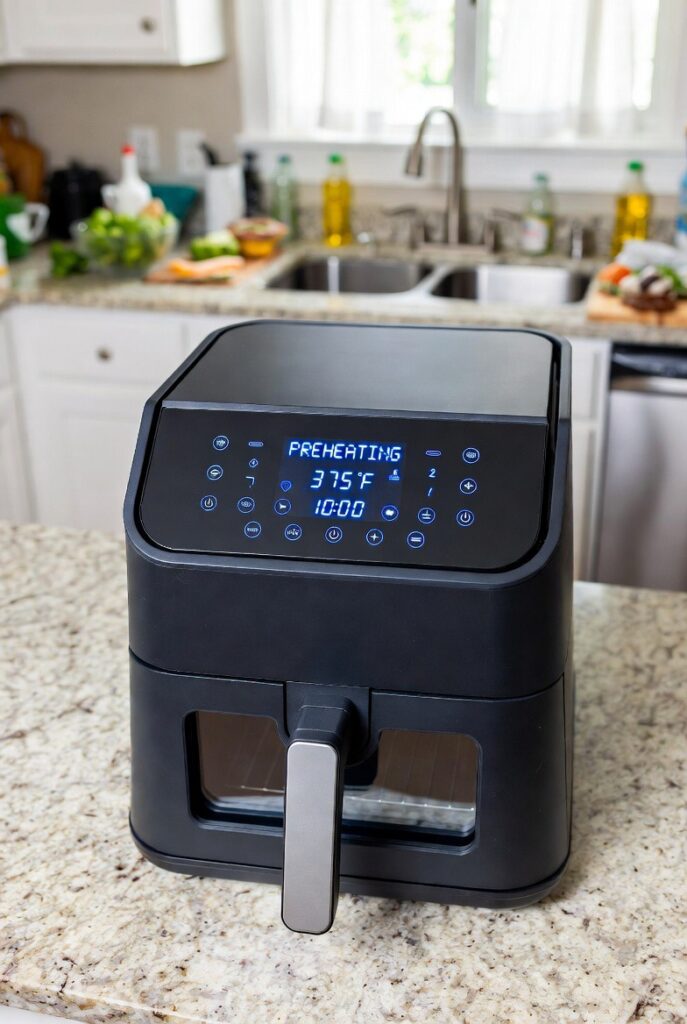
No, you do not have to preheat an air fryer every time.
In fact, for many everyday meals, preheating provides little benefit and may even reduce food quality.
Think of preheating as a tool, not a rule.
Use it when:
- Texture depends on instant heat
- Moisture needs to evaporate quickly
- Timing precision matters
Skip it when:
- Food is delicate
- Moisture retention matters
- Energy efficiency is a priority
When Preheating an Air Fryer Is a Good Idea
Frozen Foods Need a Hot Start
Frozen foods benefit the most from preheating.
Examples:
- Frozen French fries
- Chicken nuggets
- Hash browns
- Breaded snacks
Why it helps:
- Prevents thawing before crisping
- Reduces soggy bottoms
- Improves browning
Starting in a hot basket helps moisture escape quickly instead of steaming the food.
Breaded and Coated Foods Crisp Better
Preheating is useful for foods where the outer layer defines success.
Best examples:
- Breaded chicken
- Panko-coated fish
- Frozen mozzarella sticks
Instant heat sets the coating before oil or moisture can soak in.
Baking in an Air Fryer
If you’re baking, preheating becomes more important.
Preheat for:
- Cookies
- Muffins
- Cakes
- Cheesecake
The same logic applies when cooking pizza in an air fryer—especially thin crust or frozen pizza—where immediate heat helps the crust set before toppings release moisture.
Baking relies on predictable heat behavior. Without preheating, baked goods may:
- Rise unevenly
- Cook slower in the center
- Brown inconsistently
When You Should Skip Preheating an Air Fryer
Fresh Proteins Cook Better Without It
Fresh meats and seafood usually do not need preheating.
This includes:
- Chicken breast
- Salmon
- Steak
- Shrimp
Skipping preheat allows proteins to warm gradually, reducing moisture loss. For example, recipes like Salmon With Lemon Cream Sauce benefit from a gentler temperature ramp-up to avoid drying the fish.
Vegetables Roast Just Fine Cold
Most vegetables do not require preheating.
Examples:
- Broccoli
- Zucchini
- Bell peppers
- Carrots
Vegetables roast evenly as the air fryer heats up, especially when lightly coated in oil. Using the right type of oil also helps prevent dryness and uneven browning — this guide on how to choose the best oil for air fryer cooking explains which options handle high heat without smoking or breaking down.
Reheating Leftovers
Never preheat when reheating.
Cold-start reheating:
- Preserves moisture
- Prevents burnt edges
- Warms food more evenly
Preheating leftovers often leads to dry or rubbery textures.
How Long Should You Preheat an Air Fryer?
If you choose to preheat, keep it short.
General guidelines:
- 2 minutes for small air fryers
- 3–5 minutes for large baskets or oven-style units
- Use the same temperature as cooking
Anything longer wastes energy and adds no benefit.
Does Temperature Setting Change the Need for Preheating?
Yes — temperature matters.
Higher air fryer temperatures (390–400°F / 200–205°C) benefit more from preheating because surface browning happens very quickly.
Lower temperatures give food more time to heat gradually, making preheating far less important.
Understanding temperature behavior helps you adjust technique instead of blindly following recipes.
Does Air Fryer Type Affect Preheating?
Yes—design matters.
Basket-Style Air Fryers
- Heat quickly
- Strong airflow
- Often don’t need preheating
These models cook aggressively from all sides.
Oven-Style Air Fryers
- Larger chambers
- Slower heat distribution
- Preheating can help with baking
These behave closer to compact convection ovens.
Brand & Temperature Stability
Higher-end models maintain temperature more accurately. For instance, the Philips 2000 Series delivers consistent heat, reducing the need for preheating in most recipes.
Common Myths About Preheating Air Fryers
“You must always preheat.”
False. This advice is borrowed from oven cooking.
“Skipping preheat ruins food.”
Not true. Many foods cook better without it.
“Longer preheat equals crispier food.”
Wrong. Excess heat can burn coatings and dry proteins.
A Simple Decision Guide
Use this quick rule:
Preheat if:
- Food is frozen
- Food is breaded
- You are baking
Skip preheat if:
- Food is fresh
- Food is delicate
- You are reheating
This covers most real-world cooking scenarios.
Practical Tips for Better Results
- Don’t overcrowd the basket
- Shake or flip halfway
- Use a light oil coating
- Adjust time instead of temperature first
Air fryers reward small tweaks more than strict rules.
Conclusion
So, do you have to preheat an air fryer? Most of the time, no.
Preheating is useful for frozen foods, breaded items, and baking—where instant heat improves texture and consistency. For fresh proteins, vegetables, and reheating leftovers, skipping preheating saves time, energy, and moisture.
Understanding why preheating works helps you cook smarter instead of following generic instructions. Once you treat your air fryer as its own appliance—not a mini oven—you’ll get better results with less effort.
Use preheating intentionally, not automatically, and your air fryer will reward you with faster cooking and better food every time.