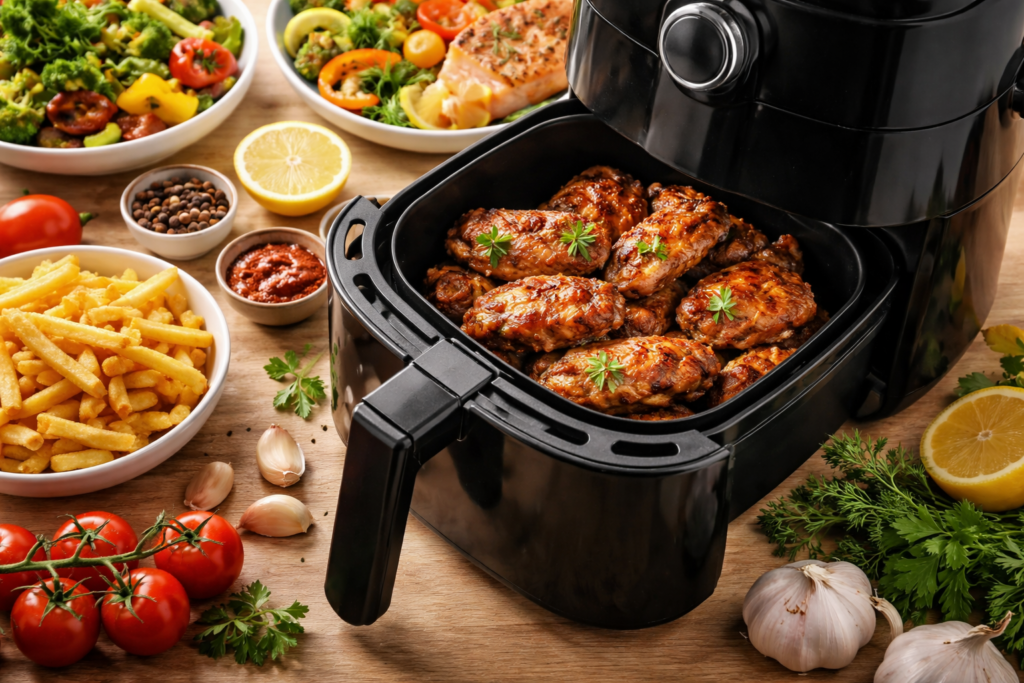
One of the biggest promises of an air fryer is fast, easy, and consistent cooking. Yet for many people, the reality looks different: chicken that’s dry on the outside and raw in the middle, vegetables that turn soft instead of crispy, or fish that overcooks in minutes. The problem usually isn’t the recipe — it’s misunderstanding temperatures and times in an air fryer. If your meals often turn out dry, temperature is usually the main reason — not lack of oil.
Air fryers don’t behave like ovens. They cook more aggressively, circulate heat constantly, and vary widely depending on brand, basket size, and wattage. Compared to a conventional oven, an air fryer uses faster airflow and higher heat intensity in a much smaller space. That’s why blindly following generic instructions often leads to disappointing results. Knowing the correct air fryer temperature is only half the equation — timing, food size, and airflow matter just as much.
These differences become obvious when you compare real models side by side — for example, in our Ninja AF181 vs Cosori TurboBlaze comparison, where temperature stability, fan strength, and basket design lead to noticeably different cooking times.
Timing and temperature are everything when cooking in an air fryer. Check out our frozen pizza guide to see exactly how to get that golden crust and gooey cheese just right
This guide is designed to remove the guesswork. If you’re completely new to air frying, it also helps to understand the basic setup and cooking process before diving into temperatures and timing. You’ll learn how air fryer temperatures really work, how to adjust cooking times confidently, and how to avoid the most common mistakes.
How Air Fryer Temperatures Actually Work
Most air fryers operate between 160°C and 200°C (320°F–400°F). While that range seems small, even a 10°C difference can dramatically change the outcome.
Air fryers:
- Use rapid hot air circulation
- Heat food from all sides
- Cook faster than ovens
This means food browns quickly — sometimes before the inside is fully cooked. This is why air fryer temperatures are not interchangeable with conventional oven temperatures, even when the numbers look similar. You can read this guide to know more about differences between air fryer and oven.
Temperature Zones Explained
- 160–170°C (320–340°F)
Gentle cooking, reheating, baking, delicate foods - 175–185°C (350–365°F)
Balanced cooking for proteins and vegetables - 190–200°C (375–400°F)
Crisping, frozen foods, roasting, browning
Choosing the correct zone is the foundation of mastering temperatures and times in an air fryer.
Time, Temperature, and Food Size
Cooking time is never universal. Two identical foods can cook differently if their thickness varies.
Keep these rules in mind:
- Thicker food = lower temperature, longer time
- Thinner food = higher temperature, shorter time
- Uneven cuts = uneven results
Always try to:
- Cut food into similar sizes
- Leave space for air circulation
- Flip or shake halfway through cooking
This alone fixes most air fryer cooking problems. Ignoring these basics is one of the main reasons people ask why food comes out dry in an air fryer.
Air Fryer Temperatures and Times Chart (Most-Used Foods)
Use this chart as a starting point, not an absolute rule. Always check doneness early.
| Food | Temperature | Time | Notes |
| Chicken breast | 180°C / 360°F | 14–18 min | Flip halfway |
| Chicken thighs(boneless) | 180°C / 360°F | 16–20 min | Juicier at lower heat |
| Chicken wings | 200°C / 400°F | 18–22 min | Shake basket |
| Salmon fillet | 175°C / 350°F | 10–14 min | Avoid high heat |
| White | 170°C / 340°F | 9–12 min | Delicate texture |
| Shrimp | 190°C / 375°F | 6–9 min | Overcooks fast |
| French Fries (fresh) | 190°C / 375°F | 15–20 min | Toss with oil |
| French Fries (frozen) | 200°C / 400°F | 12–16 min | No thawing |
| Vegetables (mixed) | 180°C / 360°F | 12–18 min | Shake often |
| Frozen nuggets | 200°C / 400°F | 10–14 min | Single layer |
| Bacon | 180°C / 360°F | 8–12 min | Watch closely |
| Reheating leftovers | 160°C / 320°F | 4–7 min | Prevent drying |
Best Temperatures and Times by Food Category
Chicken and Poultry
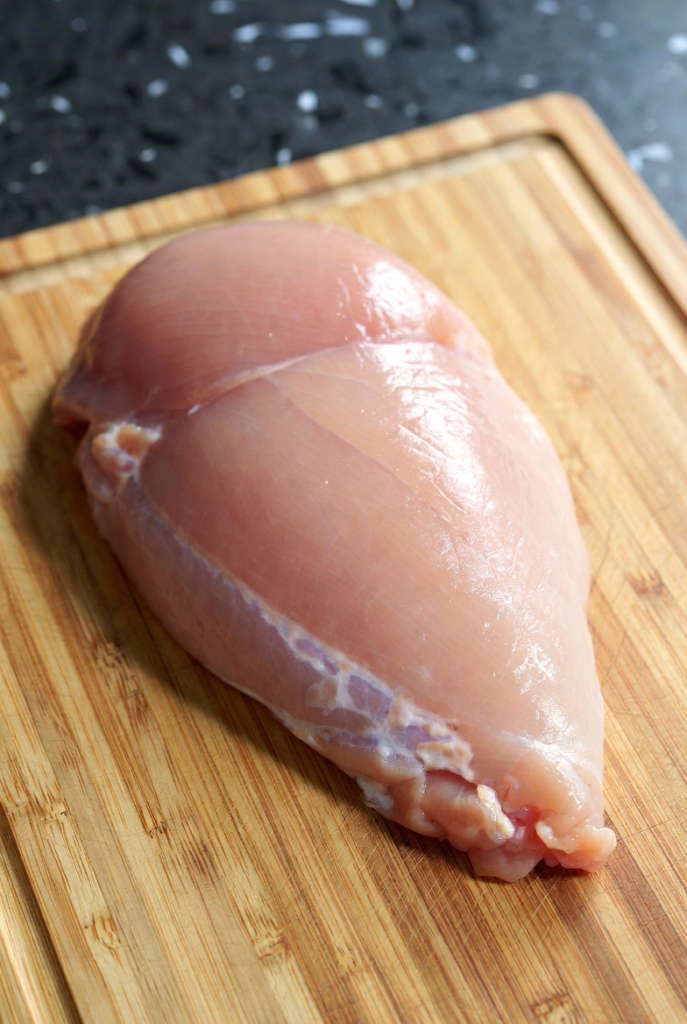
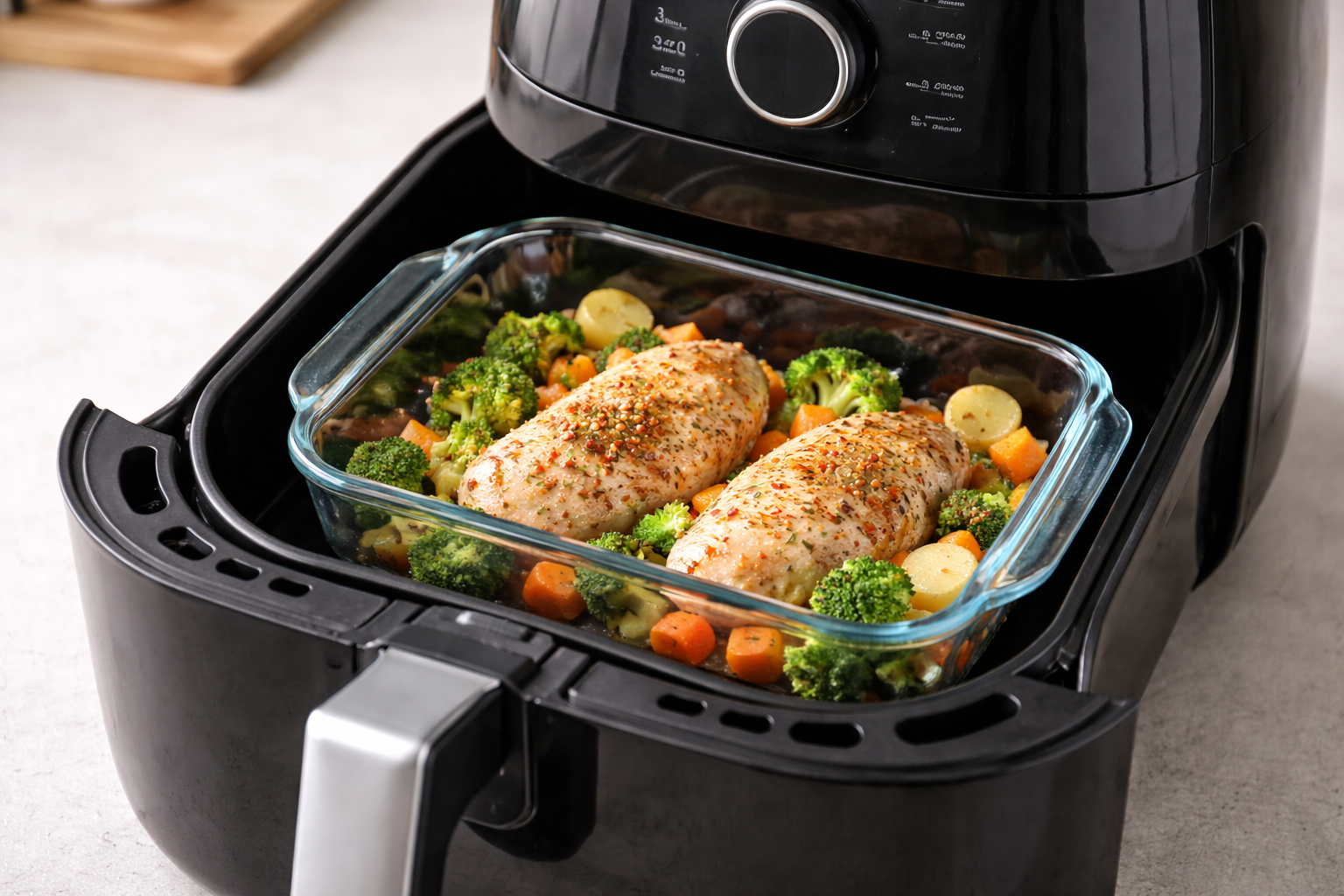
Chicken dries out quickly at high heat.
Best approach:
- Stay around 175–180°C
- Add time instead of heat
- Rest chicken after cooking
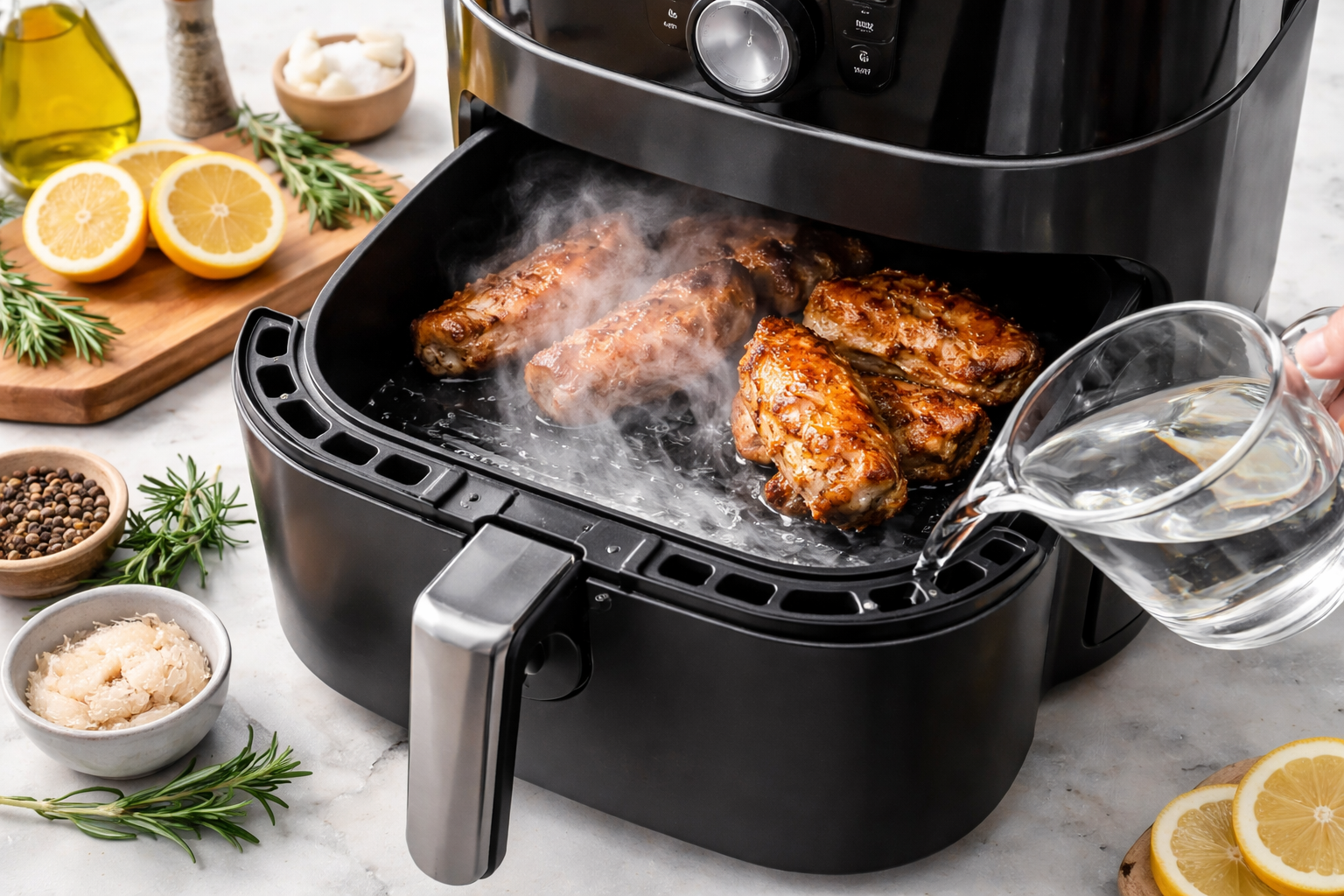
If your air fryer produces smoke while cooking poultry, grease buildup may be the issue. This is explained in more details in this article. If chicken turns dry or tough, the temperature is usually too high for the thickness — a common beginner mistake.
Fish and Seafood
Seafood needs precision more than power.
Tips:
- Lower temperature than meat
- Check doneness early
- Use parchment paper if needed
For a gentle, flavorful option, Salmon in lemon cream sauce is a great example of controlled heat producing perfect texture.
Vegetables
Vegetables fail when overcrowded.
For crisp results:
- Use moderate heat
- Light oil coating
- Shake or stir every 5 minutes
Avoid steaming by leaving space between pieces.
Frozen Foods
Frozen foods are engineered for high heat. Want to know how cooking times and temperatures differ between an air fryer and a regular oven? See Air fryer vs oven for pizza
Best practice:
- Go straight from freezer to fryer
- Use higher temperatures
- Shake or flip halfway
Common Mistakes That Ruin Air Fryer Cooking Times
These mistakes affect temperatures and times more than people realize:
- Overcrowding the basket
- Using too much oil
- Ignoring food thickness
- Not checking food early
Air fryers reward attention — even 30 seconds matters.
Do You Need to Preheat an Air Fryer?
Preheating matters more for some foods than others.
In general:
- Preheat for frozen foods, pizza, and breaded items
- Skip preheating for reheating or delicate foods
Preheating helps stabilize temperature early, which improves browning and prevents uneven cooking.
If you’re unsure when it’s necessary, this is explained in detail in Do I need to preheat an air fryer?
How to Adjust Temperatures and Times Like a Pro
When food is undercooked:
- Lower temperature by 10°C
- Add 2–4 minutes
- Cover loosely if browning too fast
When food is overcooked:
- Reduce temperature next time
- Shorten cooking time
- Check earlier than the recipe says
Most “bad” air fryer results come from too much heat, not too little.
Applying These Temperature Rules to Pizza in an Air Fryer
Pizza is one of the best examples of why understanding temperatures and times in an air fryer matters. Too much heat and the cheese burns before the crust sets. Too little heat and the base turns pale and soft.
Air fryer pizza works because of rapid air circulation — but only if temperature, rack position, and timing are balanced correctly. Thin crust, thick crust, frozen pizza, and homemade dough all require different settings.
If you’ve ever wondered why pizza turns out uneven or dry, it usually comes down to:
- Using oven temperatures instead of air fryer temperatures
- Cooking too hot without preheating
- Not adjusting time for crust thickness
Once you apply the principles from this guide — moderate heat, controlled timing, and good airflow — pizza becomes one of the easiest and most satisfying meals to make.
👉 For a full breakdown of temperatures, cooking times, and the best basket styles, see this complete guide on how to make pizza in an air fryer, where I explain how to get a crispy crust and evenly melted toppings every time.
Frequently Asked Questions
Are air fryer temperatures the same as oven temperatures?
No. Air fryer temperatures are usually 25–30°F (15–20°C) lower than conventional oven temperatures. Air fryers cook faster because of intense hot air circulation.
How do I convert oven recipes to air fryer times?
A simple rule:
Reduce cooking time by 20–30%
Reduce oven temperature by 25°F (15°C)
Always check food early to prevent overcooking.
Why does food cook faster in an air fryer?
Air fryers use rapid hot air circulation, which transfers heat more efficiently than a traditional oven. This shortens cooking time and improves crispiness.
What temperature is best for chicken in an air fryer?
Most chicken cooks well at 375°F–400°F (190°C–200°C). Chicken breasts may benefit from slightly lower heat to prevent dryness, while wings and thighs handle higher temperatures better
What temperature should I use for frozen foods?
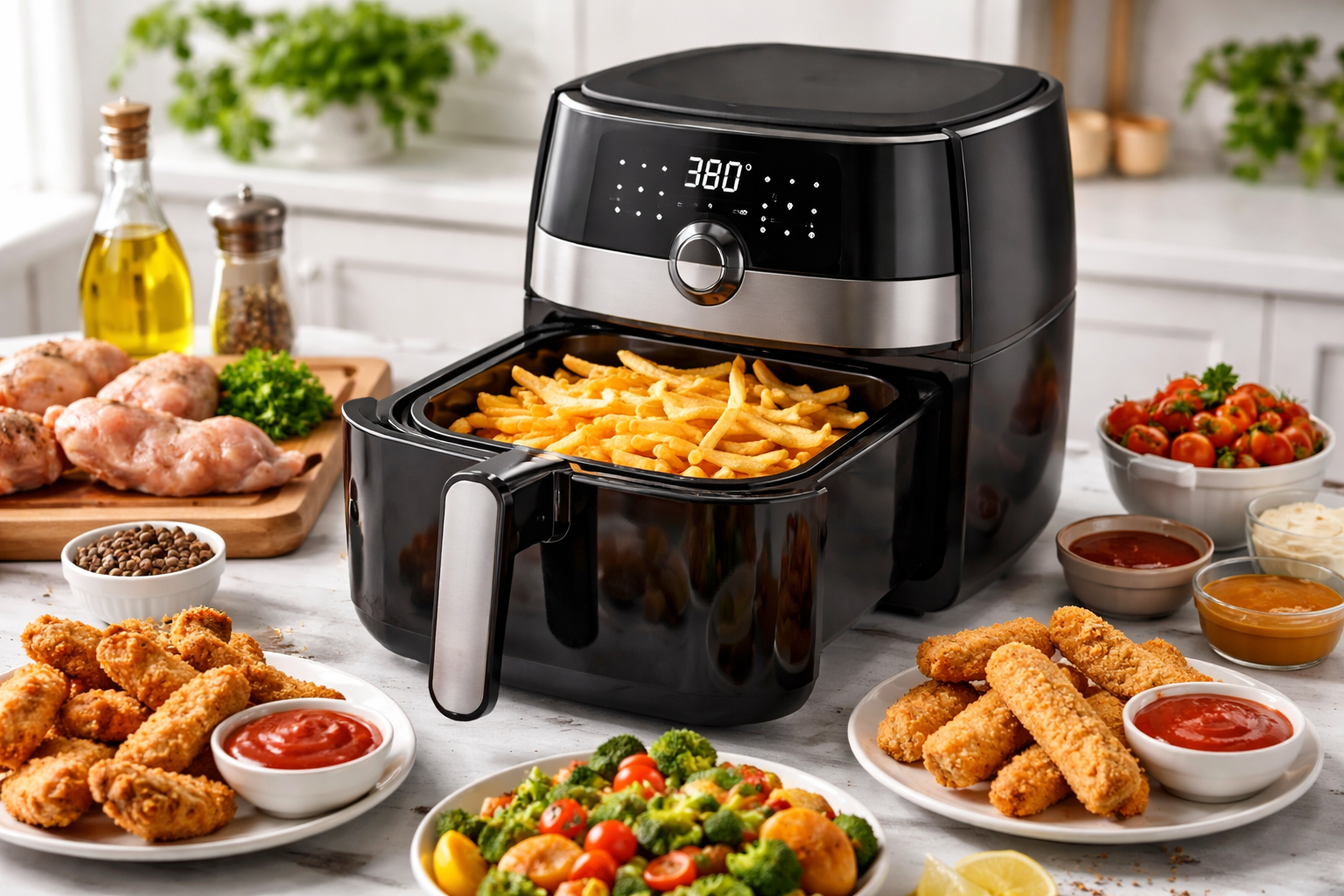
Frozen foods usually cook best at 380°F–400°F (195°C–200°C). Shake or flip halfway through for even cooking.
Why is my food burning outside but raw inside?
This happens when the temperature is too high. Lower the temperature and increase cooking time slightly to allow the inside to cook through.
Final Thoughts: Cook With Confidence, Not Guesswork
Understanding temperatures and times in an air fryer turns it from a frustrating appliance into a reliable everyday tool. Once you stop guessing and start adjusting intentionally, cooking becomes easier, faster, and far more enjoyable.
Use temperature to control intensity. Use time to control doneness. Pay attention to food size, airflow, and moisture. With these principles — and a solid chart to guide you — you’ll get consistent, crispy, and perfectly cooked results every time.