Air fryers are marketed as the “healthier” way to enjoy crispy food. Less oil. Fewer calories. Faster cooking.
But then you see headlines warning about toxic coatings, cancer-causing chemicals, and dangerous fumes — and suddenly you’re wondering:
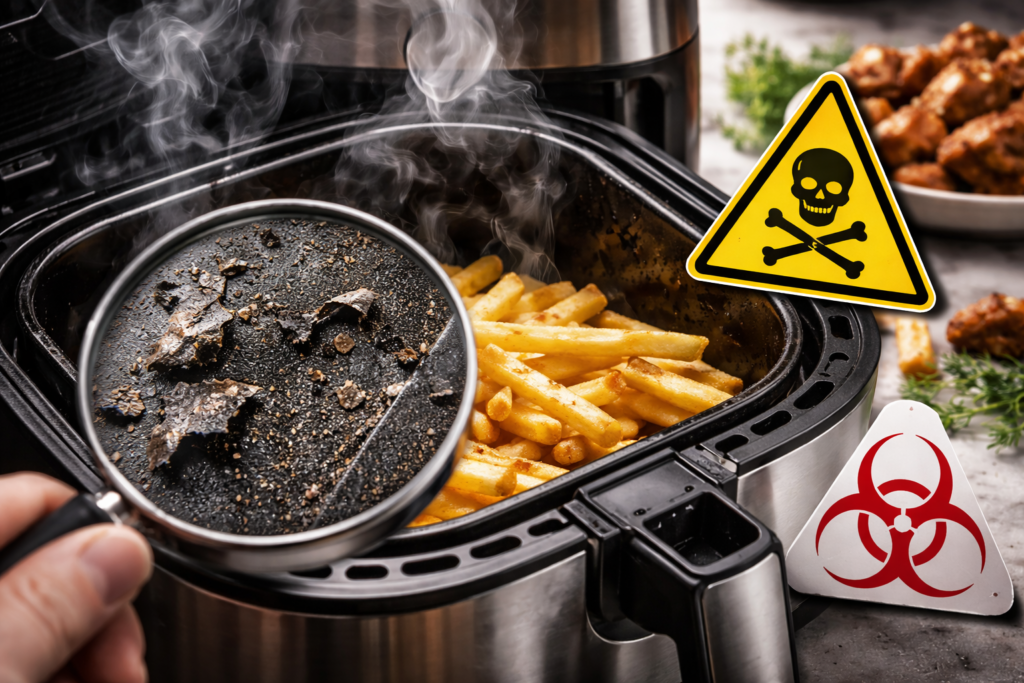
Are air fryers toxic?
It’s a fair question.
Between concerns about non-stick materials, plastic smells, acrylamide, and overheating, there’s a lot of mixed information online. Some of it is based on science. Some of it is exaggerated. And some of it confuses normal cooking chemistry with actual toxicity.
If you already own an air fryer — or you’re thinking about buying one — this guide will walk you through what’s real, what’s myth, and how to use your air fryer safely long term.
Let’s separate fear from facts.
Are Air Fryers Toxic? Here’s the Short, Honest Answer
For the vast majority of households, air fryers are not toxic when used correctly.
They don’t release radiation. They don’t emit poisonous gases under normal use. And they aren’t secretly “leaching chemicals” into your food at standard cooking temperatures.
An air fryer is essentially a compact convection oven. It circulates hot air around food using a heating element and fan. If you want a deeper breakdown, here’s a simple explanation of how hot air circulation cooking actually works.
The real concerns usually fall into three categories:
- Non-stick coating safety
- Plastic or chemical smells
- High-heat cooking byproducts like acrylamide
Let’s go deeper.
Non-Stick Coatings: Is Teflon Dangerous in Air Fryers?
Most air fryer baskets are coated with PTFE, commonly known under the brand name Teflon.
This is where most “toxic air fryer” claims come from.
What the science says
PTFE is stable and considered safe at typical cooking temperatures (below 260°C / 500°F).
Air fryers generally max out around 200–205°C (400°F). That’s well below the temperature where PTFE starts to degrade and release fumes.
The danger zone begins when:
- Temperatures exceed 260°C (500°F)
- The coating is severely scratched or peeling
- The appliance malfunctions and overheats
Under normal conditions? It remains stable.
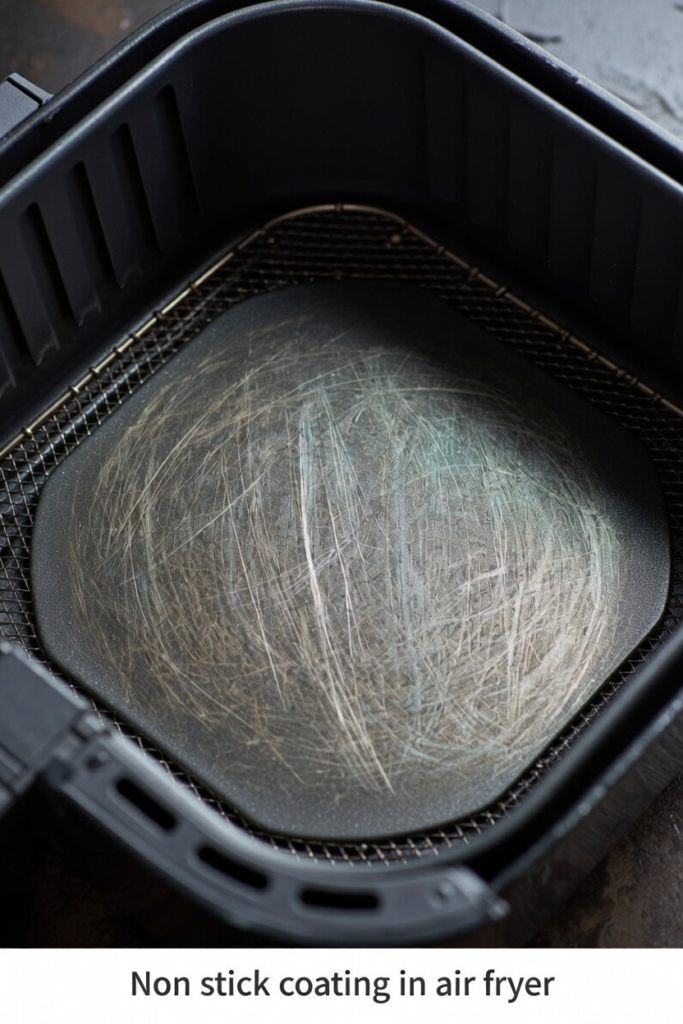
When should you replace your basket?
If you notice:
- Flaking coating
- Deep scratches
- Bubbling or warping
It’s time for a replacement. Not because your air fryer is “toxic,” but because damaged coatings degrade faster and cook unevenly.
What About That “Burning Plastic” Smell?
If you searched “are air fryers toxic,” there’s a good chance it’s because of a strange smell during early use.
A plastic smell is common in brand-new units.
This usually happens because:
- Manufacturing residues are burning off
- Internal components are curing under heat
- Protective coatings are heating for the first time
In most cases, the smell disappears after 2–3 cycles.
If yours smells off, here’s a practical guide on why air fryer smells like plastic explaining what causes it and how to fix it.
However, stop using your air fryer if:
- The smell persists after multiple uses
- You see visible smoke without food inside
- You detect an electrical or burning wire odor
That’s a malfunction — not “normal toxicity.”
The Real Risk: Acrylamide Formation
If we’re being honest, the biggest concern isn’t the appliance itself — it’s what happens to food at high temperatures.
When starchy foods (like potatoes) are cooked above 120°C (248°F), they can form a compound called acrylamide.
Acrylamide has been studied for potential cancer risk in very high exposure levels.
Important context:
- Air fryers can create acrylamide.
- Ovens can create acrylamide.
- Deep fryers often create even more.
This is a high-heat cooking issue — not an air fryer-specific problem.
How to reduce acrylamide when air frying
- Cook to golden yellow, not dark brown
- Avoid charring
- Soak potatoes 15–30 minutes before cooking
- Use moderate temperatures when possible
Compared to deep frying in heavily oxidized oil, air frying may actually reduce harmful compounds overall.
Are Air Fryers Safer Than Deep Frying?
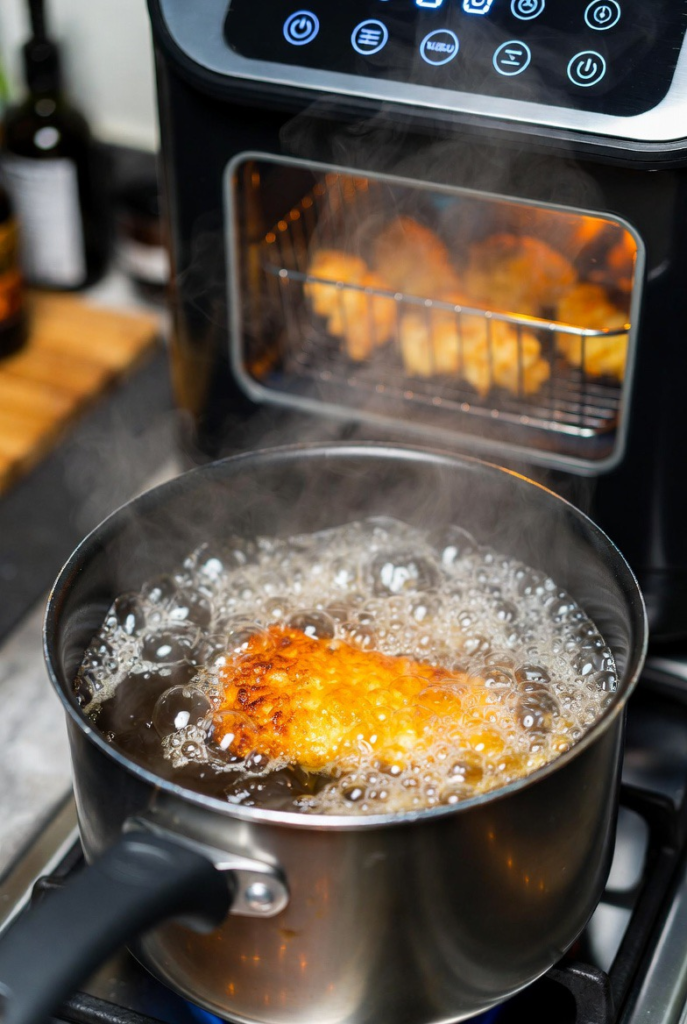
In many cases, yes.
Traditional deep frying involves:
- Large volumes of oil
- Oil degradation at high heat
- Oxidized fats
- Repeated oil reuse
Air fryers drastically reduce oil use.
Less oil means:
- Fewer oxidized lipids
- Lower calorie intake
- Less exposure to degraded cooking fats
If your concern is long-term health impact, deep frying carries more documented risks than air frying.
Is Aluminum Foil or Parchment Paper Toxic in an Air Fryer?
Used correctly, no.
But misuse can cause problems.
Here’s a practical breakdown of safe foil usage inside an air fryer.
Follow these rules:
- Don’t block airflow
- Don’t let foil touch the heating element
- Secure parchment paper properly
Improper placement can cause smoke — which people often mistake for toxicity.
If Your Air Fryer Is Smoking, Is It Dangerous?
Smoke is usually a maintenance issue.
Common causes:
- Grease buildup
- Food debris
- Oil dripping onto the heating element
Here’s a full troubleshooting guide on why your air fryer might be smoking
Cleaning the air fryer basket matters more than people realize. Especially the internal coil.
Most “toxic air fryer” concerns disappear when the unit is clean and maintained.
Cheap Air Fryers vs Quality Brands: Does Safety Differ?
Yes — build quality matters.
Lower-end units may use:
- Thinner non-stick coatings
- Lower-grade plastics
- Less insulation
That doesn’t automatically make them toxic. But it increases:
- Odor issues
- Coating wear
- Overheating risk
Look for:
- BPA-free materials
- Reputable brands
- Clear temperature controls
- Solid warranty support
Do Air Fryers Emit Radiation?
No.
Air fryers use electric heating elements — just like ovens or toasters. They do not emit microwave radiation.
They also tend to use less energy than traditional ovens because they heat smaller spaces more efficiently. If you’re curious about efficiency comparisons between ovens and air fryer, you can check this guide explaining the electricity usage.
Lower energy usage does not equal higher toxicity.
How To Use Your Air Fryer Safely (Simple Checklist)
If you want maximum peace of mind, follow this:
- Don’t exceed recommended temperatures
- Avoid preheating empty for long periods
- Use silicone or wooden utensils
- Replace scratched baskets
- Clean grease regularly
- Ventilate your kitchen
That’s it. Nothing extreme.
So… Are Air Fryers Toxic Long Term?
Based on current research and real-world usage:
Air fryers are not inherently toxic.
The risks people worry about usually involve:
- Overheating non-stick coatings
- Burning food excessively
- Poor maintenance
- Extremely cheap manufacturing
When used properly, air fryers are comparable to convection ovens in safety — and potentially healthier than deep frying due to reduced oil exposure.
FAQs
Can air fryers cause cancer?
There’s no direct evidence that air fryers cause cancer. However, burning starchy foods can create acrylamide, which has been studied in high doses.
Is PTFE in air fryers safe?
Yes, at normal cooking temperatures below 260°C (500°F). Problems arise only with extreme overheating.
Why does my air fryer smell chemical?
Most often it’s manufacturing residue burning off or grease buildup — not toxic emissions.
Are ceramic air fryers safer?
Ceramic-coated air fryers are often chosen by people who want to avoid traditional PTFE non-stick coatings. Ceramic coatings are typically PTFE-free and can tolerate higher temperatures without breaking down.
However, durability varies between brands, and some ceramic coatings wear faster than high-quality non-stick baskets.
If you’re specifically looking for PTFE-free options, you can check this guide to the best ceramic air fryers, which compares popular models and explains how ceramic coatings differ from standard non-stick baskets.
Should I stop using my air fryer?
If it’s functioning normally and undamaged, there’s no strong scientific reason to stop.
Final Thoughts: Should You Be Concerned?
It’s smart to question what you cook with. But fear-based headlines don’t always tell the full story.
Air fryers are not toxic under normal use. Most safety concerns come down to overheating, burning food, or neglecting maintenance — issues that apply to nearly every cooking appliance.
If you:
- Avoid charring food
- Keep your unit clean
- Replace damaged baskets
- Use reasonable temperatures
You can cook confidently.
Like any kitchen appliance, safety depends less on the machine — and more on how you use it.