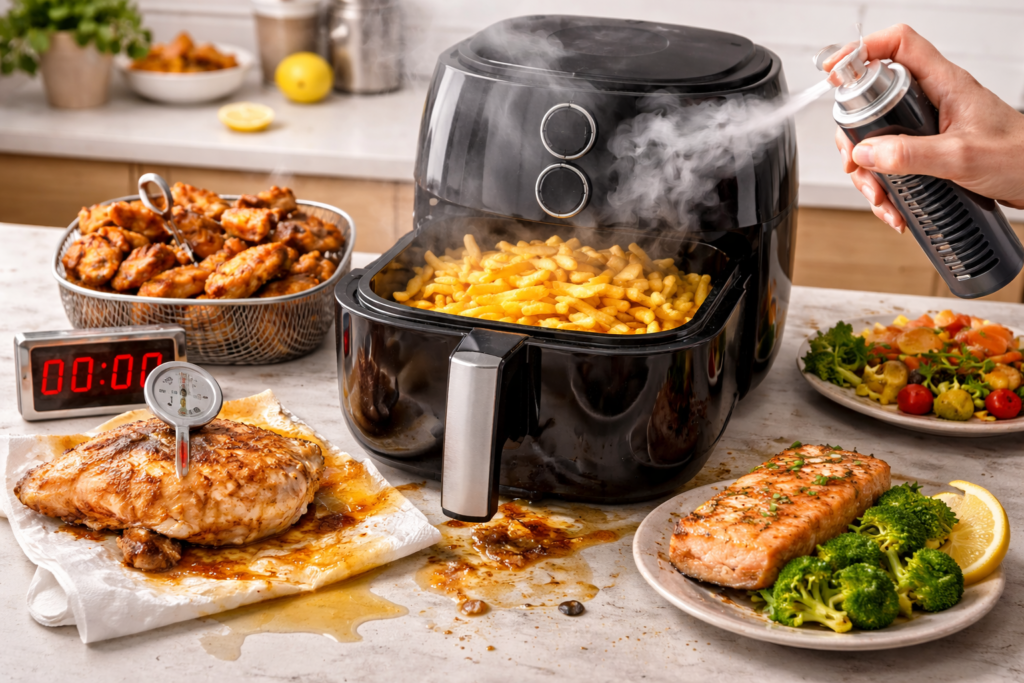
Air fryers promise crispy fries, juicy chicken, and healthier meals with less oil — which explains why they’ve become one of the most loved kitchen appliances in recent years. But if your food keeps coming out dry, uneven, or strangely soggy, you’re not doing anything wrong… you’re just making a few extremely common air fryer mistakes.
Most people assume air fryers are foolproof. In reality, they work very differently from ovens, microwaves, and deep fryers. Small technique errors can completely change your cooking results. The difference between perfectly crispy food and disappointing meals often comes down to airflow, temperature control, and preparation methods.
The good news is that these mistakes are easy to fix once you understand how air frying actually works. If you’re just getting started, this simple beginner walkthrough explains the basics step by step so you can avoid these mistakes from day one. In this guide, you’ll learn the most common air fryer problems, why they happen, and simple solutions that instantly improve your cooking results. Whether you just bought your first appliance or want to get better results from your current one, these tips will help you cook with confidence.
Skipping Preheating (One of the Biggest Air Fryer Mistakes)
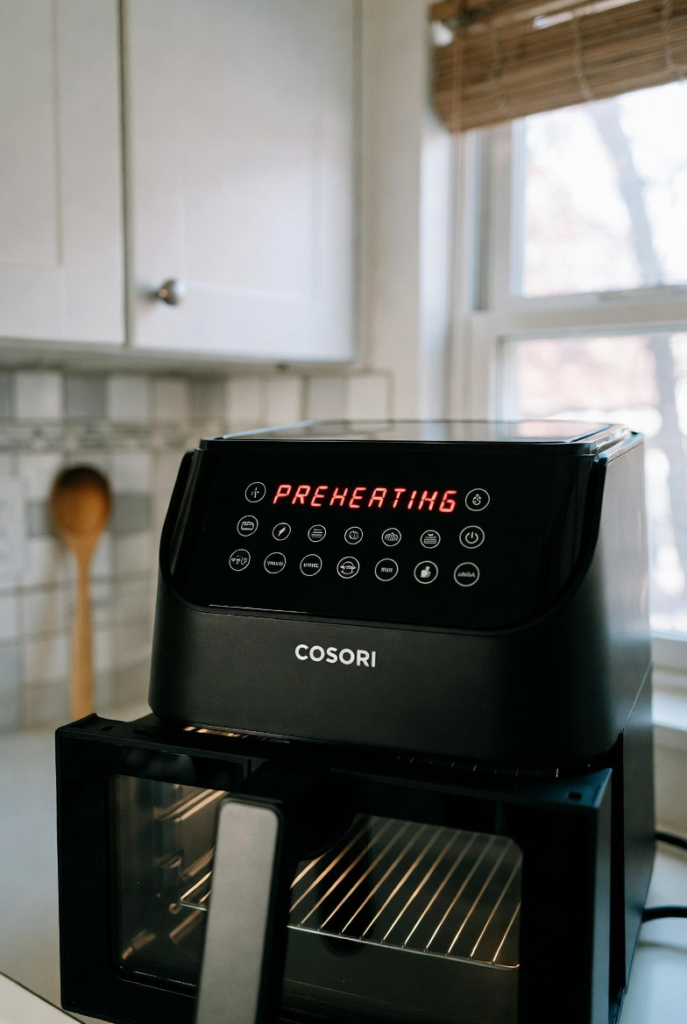
Many users assume air fryers heat instantly, but starting with a cold appliance often leads to uneven cooking and poor crisping.
Air fryers rely on rapid hot air circulation. If the cooking chamber isn’t hot when food goes in, the exterior cooks slowly, which prevents proper texture development.
How to Fix It
- Preheat most air fryers for 3–5 minutes
- Always preheat for breaded foods and proteins
- Follow recipe recommendations carefully
If you’re unsure when preheating really matters, this guide explaining whether you actually need to warm up your air fryer breaks it down in detail.
Overcrowding the Basket
This is easily the most common cause of soggy food. Air fryers cook by circulating hot air around each piece of food. When the basket is packed tightly, airflow stops working properly.
Instead of frying, your food starts steaming.
Signs You’re Overcrowding
- Fries cook unevenly
- Food sticks together
- Crispiness disappears
How to Fix It
- Cook in single layers whenever possible
- Leave small gaps between pieces
- Cook larger portions in batches
If you frequently cook for families, learning how capacity affects cooking performance in this basket size comparison guide can help you choose the right appliance.
Using Too Much or Too Little Oil
Air fryers still need some oil to create crispy textures. Completely skipping oil often produces dry or rubbery food, while too much oil causes smoking and greasy results.
Using the wrong type of oil can also affect both flavor and performance. Oils with low smoke points break down faster at high temperatures, leading to unpleasant smells and excess smoke. If you’re unsure which options perform best, this guide on which oils work best for air fryer cooking explains smoke points, flavor differences, and how to prevent burning.
Best Oil Practices
- Use a light spray instead of pouring oil
- Choose high smoke-point oils like avocado or sunflower oil
- Avoid aerosol sprays that damage nonstick coatings
Aerosol sprays can gradually break down traditional non-stick surfaces, which is why many newer models now use ceramic-coated baskets designed to resist chemical sprays and scratching more effectively. If you’re interested in those alternatives, this guide to air fryers with ceramic-coated baskets explains how ceramic coatings compare to standard non-stick designs.
Cooking at Incorrect Temperatures
Many traditional oven recipes don’t convert directly to air fryers. Because air fryers circulate heat rapidly, they cook faster and often require lower temperatures.
Using oven temperatures without adjustment is a common air frying error that leads to burnt exteriors and raw centers.
Easy Temperature Conversion Rule
Reduce oven temperature by about 25°F (4°C).
Keeping a quick cooking reference, like this detailed air fryer cooking temperature and time guide, helps eliminate guesswork.
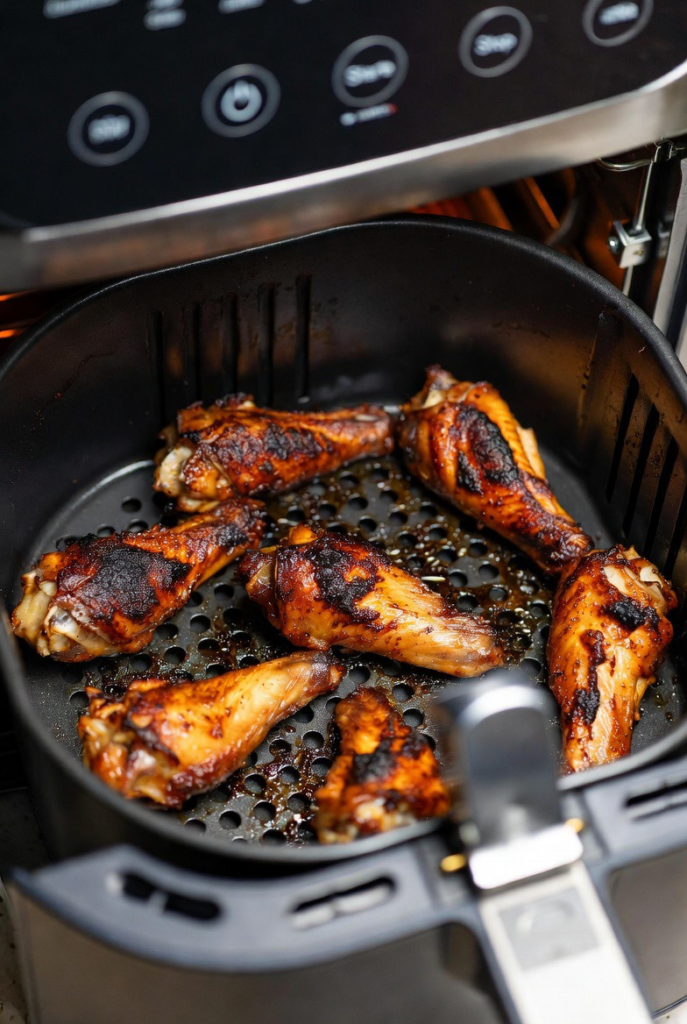
Forgetting to Shake or Flip Food
Air fryers circulate heat from multiple angles, but they still need movement to cook evenly.
Foods like fries, vegetables, nuggets, or shrimp especially benefit from shaking during cooking.
How to Fix It
- Shake small foods halfway through cooking
- Flip thicker proteins like chicken breasts or fish
- Set timer reminders if your air fryer doesn’t alert you
Not Drying Food Before Cooking
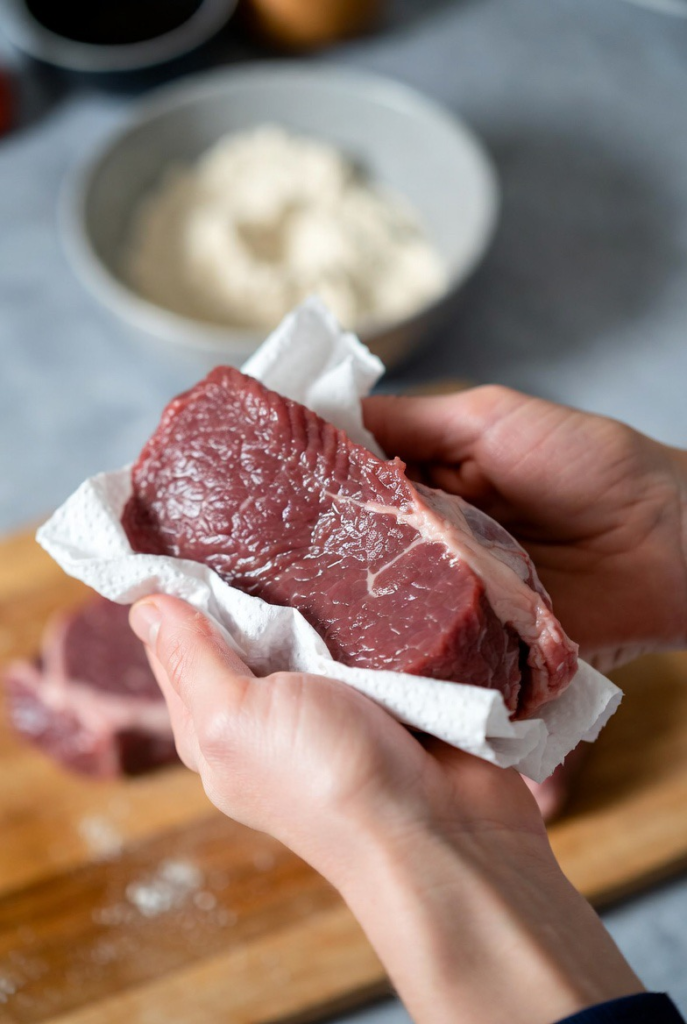
Moisture is the enemy of crispiness. Water prevents the Maillard reaction, which creates golden textures and rich flavors.
This mistake is extremely common with marinated foods and frozen ingredients.
How to Fix It
- Pat proteins and vegetables dry before cooking
- Remove excess marinade
- Shake off ice crystals from frozen foods
Ignoring Smoke or Burning Smells
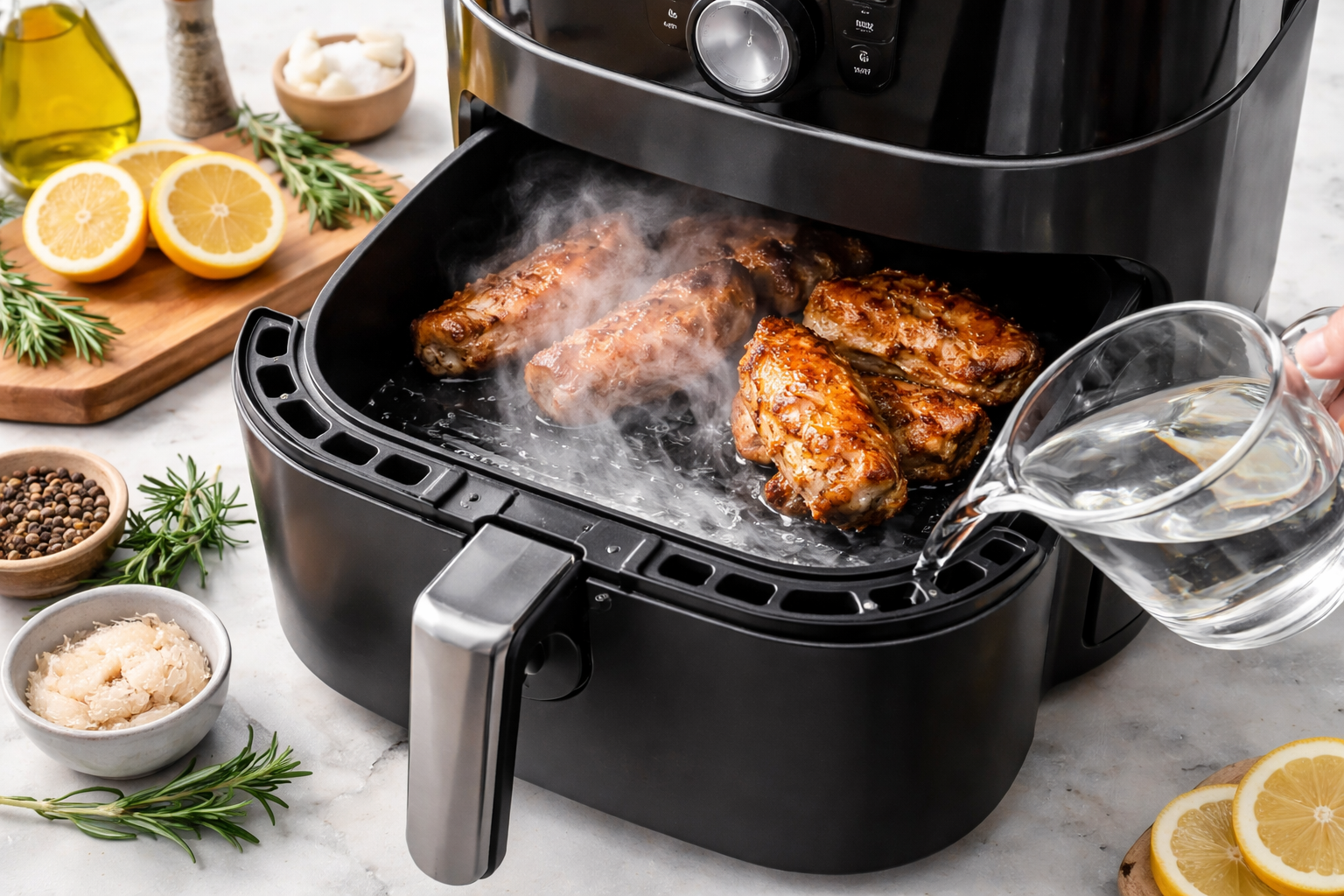
Smoke usually signals grease buildup or leftover food particles. In some cases, people try adding a small amount of liquid underneath to reduce smoke — but it’s important to understand when using water in an air fryer actually helps and when it can cause problems.
Quick Fix
- Clean the basket after each use
- Remove grease from trays and interior surfaces
- Use drip trays when cooking fatty foods
If you want a simple cleaning routine, this step-by-step air fryer basket cleaning guide shows safe maintenance methods.
Using the Wrong Accessories
Not every oven-safe item works inside an air fryer. Some materials block airflow or melt under high temperatures.
Safe Accessories
- Silicone liners
- Metal racks designed for air fryers
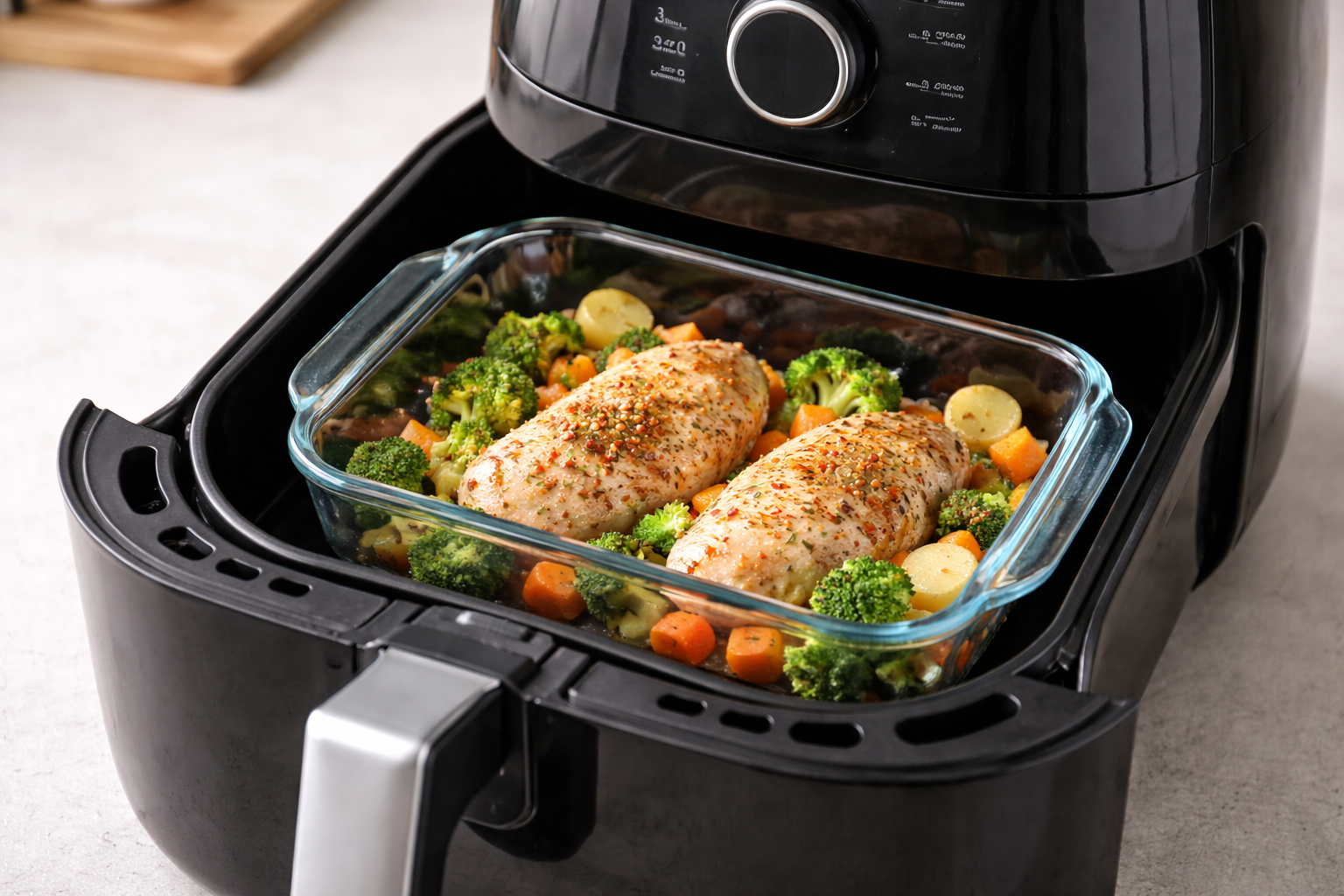
- Oven-safe ceramic or glass dishes
Accessories should always allow airflow around food. Many beginners also wonder whether glass containers or baking dishes are safe to put inside an air fryer, especially when cooking casseroles or desserts. Accessories should always allow airflow around food.
Placing Your Air Fryer in the Wrong Location
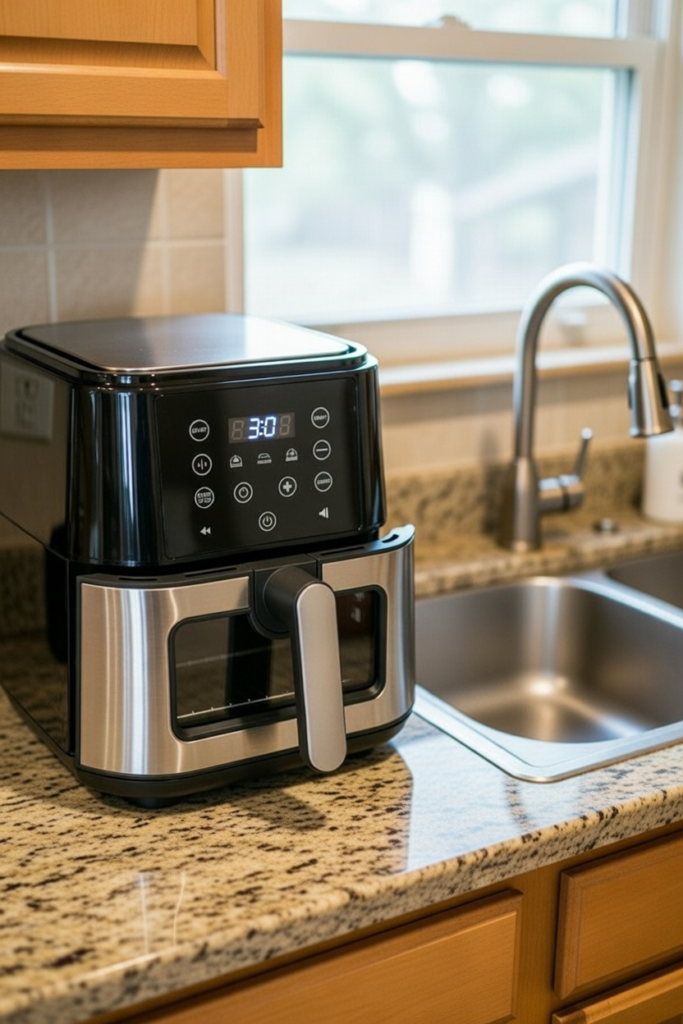
Poor placement can cause overheating, weak airflow, and safety risks.
Air fryers release hot air from rear or side vents. Blocking them reduces performance and increases fire hazards.
Safe Placement Tips
- Leave at least 5 inches of clearance
- Avoid enclosed cabinets
- Use flat, heat-resistant countertops
You can learn more about safe setup and ventilation in this beginner-friendly air fryer safety guide.
Not Adjusting for Different Air Fryer Models
Every air fryer cooks slightly differently based on:
- Wattage
- Basket design
- Air circulation technology
- Size and capacity
Recipes should always be treated as guidelines rather than exact instructions.
If you’re still shopping or upgrading, this guide on choosing the best air fryer for your cooking style explains which features impact performance most.
Buying a Noisy or Low-Quality Air Fryer
Many buyers focus only on price or size. But poor build quality often leads to uneven cooking and frustrating noise levels.
If noise bothers you, researching some of the quietest air fryer models available can dramatically improve daily cooking comfort. Some models also use infrared heating technology, which is explored in depth in this detailed T-fal infrared air fryer review.
Forgetting to Check Food Early
Air fryers cook faster than ovens, which means food can burn quickly if left unattended.
Smart Cooking Habit
- Check food 3–5 minutes early
- Use meat thermometers for proteins
- Record cooking times that work best for your model
Not Learning Your Air Fryer’s Capacity Limits
Many beginners underestimate how important size is. Smaller air fryers cook faster but hold less food. Larger ones require longer heating times but allow batch cooking.
Understanding capacity helps avoid overcrowding and uneven cooking.
Frequently Asked Questions
Why is my air fryer food always dry?
You may be skipping oil, overcooking food, or using temperatures that are too high. Try lowering heat slightly and using a light oil coating.
Why does my air fryer make smoke?
Smoking usually comes from grease buildup or excess oil. Cleaning regularly prevents most smoke problems.
Can I cook frozen food directly in an air fryer?
Yes, but remove ice buildup first and adjust cooking times slightly.
Do air fryers really make food healthier?
They reduce oil usage significantly compared to deep frying, which can lower calorie and fat intake.
How long do air fryers typically last?
Most quality air fryers last 3–5 years with proper cleaning and maintenance.
Conclusion
Air fryers are designed to simplify cooking, but small technique mistakes can prevent them from delivering the crispy, flavorful results they’re known for. Overcrowding baskets, skipping preheating, ignoring cleaning, and using incorrect temperatures are among the most common reasons air fryer meals fail.
Fortunately, these air fryer mistakes are easy to correct. By allowing proper airflow, monitoring cooking progress, using the right amount of oil, and maintaining regular cleaning routines, you can dramatically improve both food quality and appliance performance.
Once you understand how your air fryer works and adjust your cooking habits accordingly, it becomes one of the most reliable and convenient tools in your kitchen. Mastering these simple techniques will help you consistently create faster, healthier, and more delicious meals with confidence.